
Squirrels in the Attic? Safe Next Steps for Los Angeles Homes
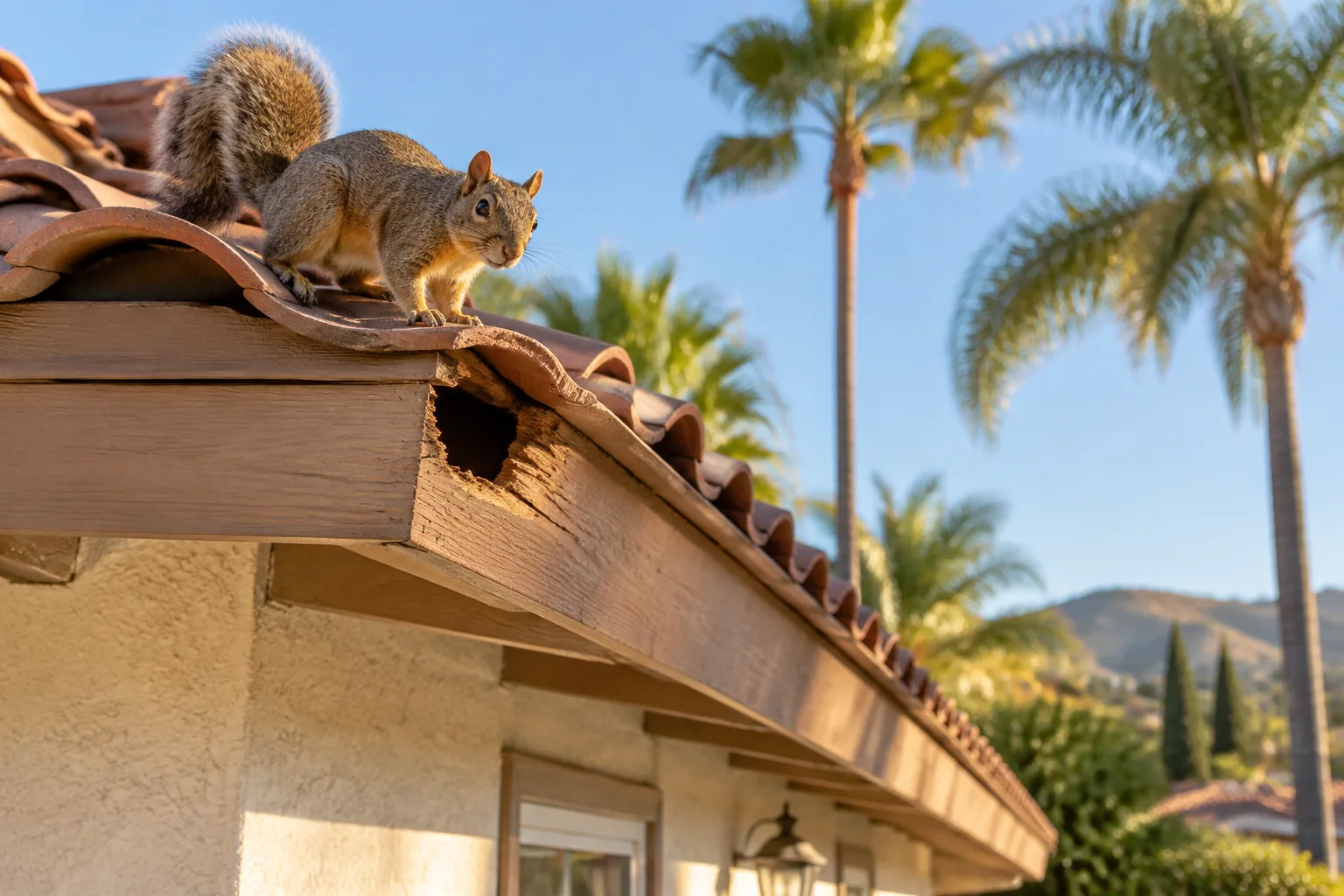
Scratching overhead at 7 a.m. Scurrying across the ceiling in the late afternoon. A chewed corner on the fascia you never noticed before. If that sounds familiar, you may have squirrels in your attic, and you are far from the only Los Angeles homeowner dealing with it. This guide walks you through what to do right now, how to tell squirrels apart from other attic animals, what damage they tend to leave behind, and what a proper attic cleanup looks like once the animals are gone. At Los Angeles Attic Cleanup, our work starts where removal ends: we inspect, clean, sanitize, seal, and re-insulate attics across greater Los Angeles.
Squirrels in the Attic? Start With These Safe Next Steps
Quick answer: If you hear daytime scratching or see fresh roofline damage, keep people and pets away and do not handle the animal or close an opening. Ask a qualified wildlife professional to confirm the animals are out and the entry is safe to repair. Then have the attic inspected for contaminated insulation, nesting debris, and damage before cleanup or replacement.
Keep people and pets away, and do not seal the opening yet
It is tempting to grab a ladder and patch the hole. Don't. Sealing an entry while squirrels are still inside can trap adults or young in the attic, which often leads to new chewing damage as they try to get out, or to odor problems if an animal dies inside. Avoid handling squirrels or disturbing a nest. Stressed wildlife can bite or scratch, and nests can contain young that a parent will try to reach.
- Keep children and pets out of the attic and away from the entry area.
- Note when you hear activity (morning, afternoon, night) and where.
- Photograph any roofline damage you can see safely from the ground.
- Do not use poison baits. California rules do not allow poison to be used on tree squirrels, according to the UC Statewide IPM Program guide to tree squirrels.
Contact a qualified wildlife professional if squirrels may still be inside
Squirrel removal in California is not a casual DIY job. Tree squirrels have specific legal protections, and the California Department of Fish and Wildlife's nuisance wildlife guidance states that wildlife cannot be trapped and released elsewhere. A licensed wildlife control provider can identify the species, check for young, and use the right exclusion method for your situation.
Once the animals are confirmed out, the next step is restoring the space. Request a free attic cleanup inspection or call (877) 706-9839 and we will assess what the squirrels left behind.
How to Tell if Squirrels Are in Your Attic
The clearest sign of squirrels in an attic is daytime activity. Tree squirrels are active during the day and rest at night, while rats and raccoons are mostly nocturnal. In Los Angeles County, the tree squirrels homeowners most often meet are the eastern fox squirrel and the western gray squirrel, according to the Los Angeles County Agricultural Commissioner's tree squirrel information sheet.
Daytime scurrying, chewing, nesting material, and roofline damage
Common signs of squirrels in the attic include:
- Sounds at dawn and late afternoon: quick scurrying, rolling or dragging noises, and scratching near the eaves.
- Chewed entry points: rounded holes in fascia boards, roof vents, soffits, or roof-to-wall gaps, often near trees or utility lines.
- Nesting material: shredded leaves, twigs, bark, and pulled-up insulation gathered in corners or near the entry.
- Droppings and staining: small, oblong droppings and urine stains on insulation or framing.
- Roof traffic: squirrels running along power lines, fences, or overhanging branches straight onto the roof.
The UC IPM program notes that tree squirrels often travel along overhead utility lines and can gnaw their way into an attic when no obvious opening exists. That is why entry points are frequently found high on the roofline, not at ground level.
Squirrel vs. rat vs. raccoon: which animal is in your attic?
Sound and timing are useful clues, but they are not a diagnosis. Use this table to narrow it down, then let a professional confirm.
| Clue | Squirrels | Rats | Raccoons |
|---|---|---|---|
| Time of activity | Daytime, especially early morning and late afternoon | Night | Night, often after dusk |
| Type of noise | Fast scurrying, rolling, scratching | Light, quick scratching and gnawing | Heavy thumping, walking, vocal chatter |
| Typical entry | Chewed holes high on roofline, vents, fascia | Small gaps, roof vents, pipe openings | Torn vents, lifted roof sections, large openings |
| Nest signs | Leaves, twigs, shredded insulation | Shredded material, runways in insulation | Flattened insulation, latrine areas |
| Droppings | Small, oblong, often scattered | Small, dark, capsule-shaped, concentrated along paths | Large, tubular, grouped in latrines |
What Damage Squirrels Can Leave Behind
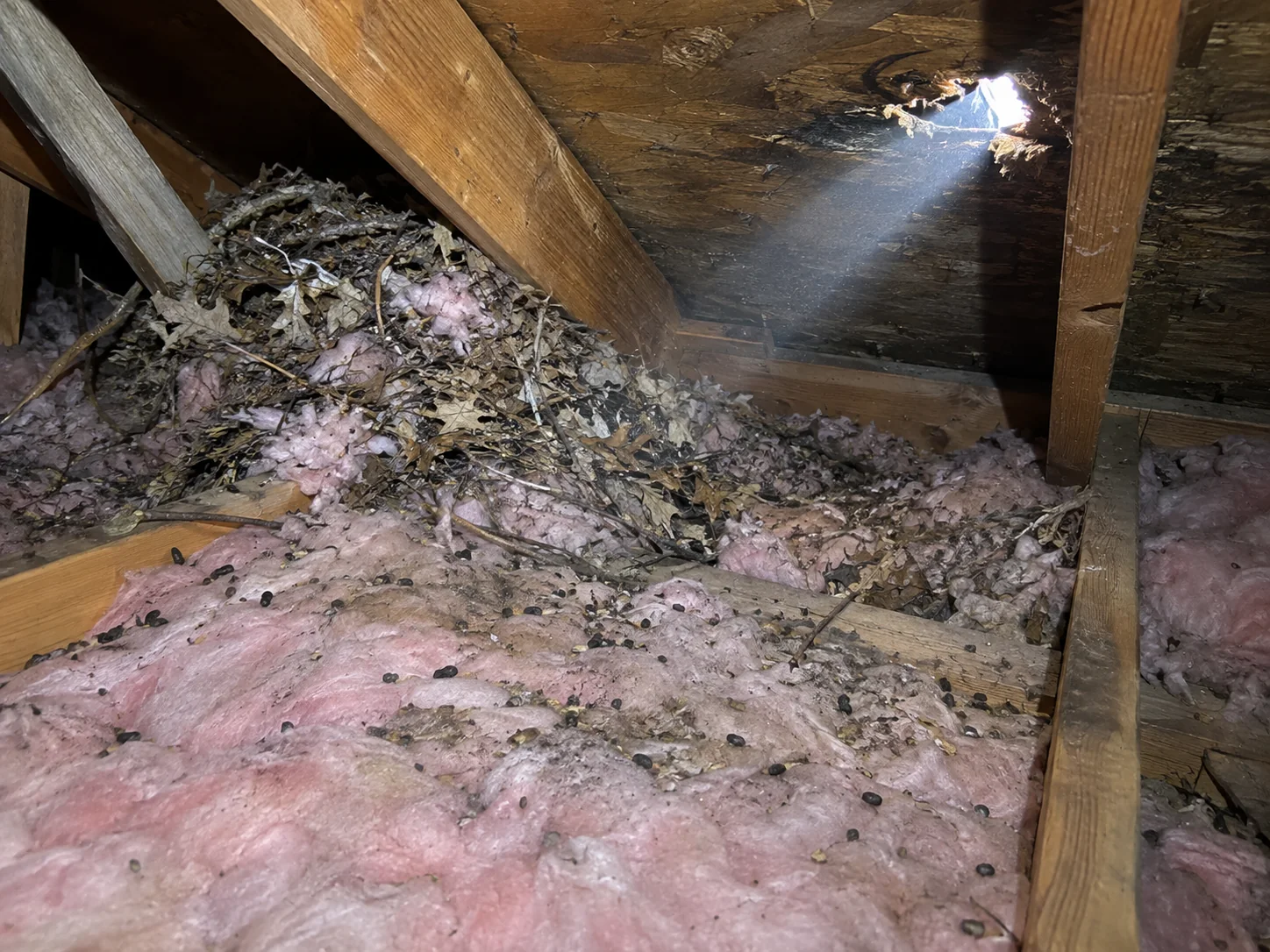
Squirrel damage in an attic usually falls into three groups: contaminated or displaced insulation, chewed materials, and the entry holes themselves. The longer squirrels stay, the more of each you are likely to find.
Insulation, nesting material, and contamination
Squirrels tunnel through and pull up insulation to build nests. What remains is often compressed, displaced, and soiled with droppings and urine. Compressed or soiled insulation does not insulate the way it should, which can affect comfort and cooling costs during hot Los Angeles summers. The UC IPM program also notes that tree squirrels can carry diseases and are frequently infested with fleas and mites, which is one more reason to leave cleanup of nesting debris to a team with proper protective equipment and containment.
Wiring, ducts, and entry points that need professional assessment
Squirrels gnaw constantly. In an attic, that can mean chewed wire insulation, torn or crushed ductwork, and damaged vent screens. Any chewed wiring should be checked by a licensed electrician. Damaged or contaminated duct sections can circulate dust and odors into your living space; our attic air duct repair and replacement service addresses that part of the job. Entry points themselves can let in rain and other animals if they are left open after removal.
What Happens After Squirrel Removal: Attic Cleanup in Los Angeles
Most guides treat removal as the finish line. It isn't. Once a wildlife professional confirms the squirrels are out, the attic still holds the nest, the droppings, the soiled insulation, and the scent trails that can attract new animals. A proper cleanup follows a set order, and the order matters. We cover the full process in our guide to what happens after the animal is gone.
1. Inspect and document the attic
Every job starts with a free inspection. We assess which insulation can stay and which must go, where contamination is concentrated, and whether there is secondary damage to wiring, ducts, or framing. You get a clear, honest estimate before any work begins.
2. Remove contaminated insulation and debris with containment
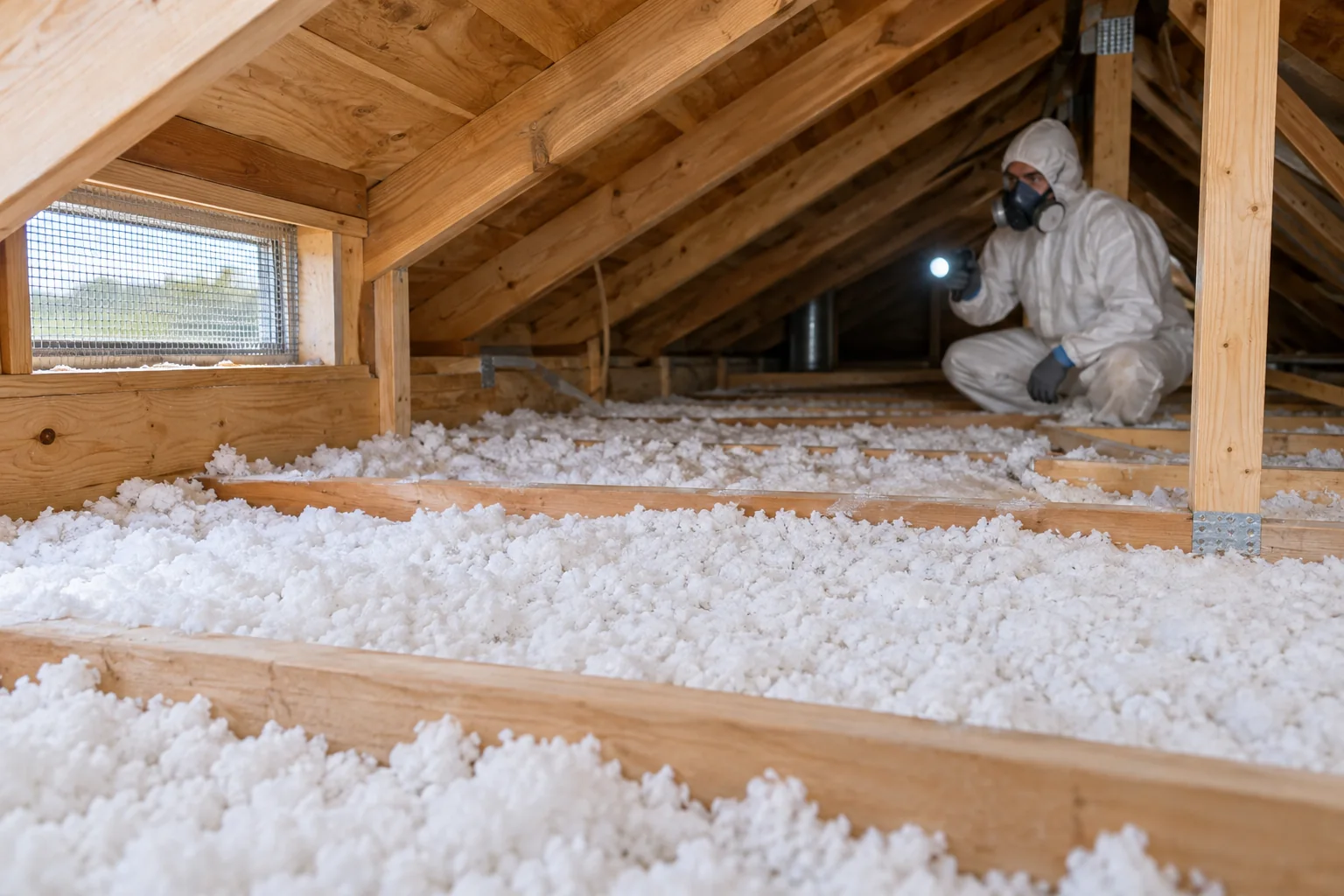
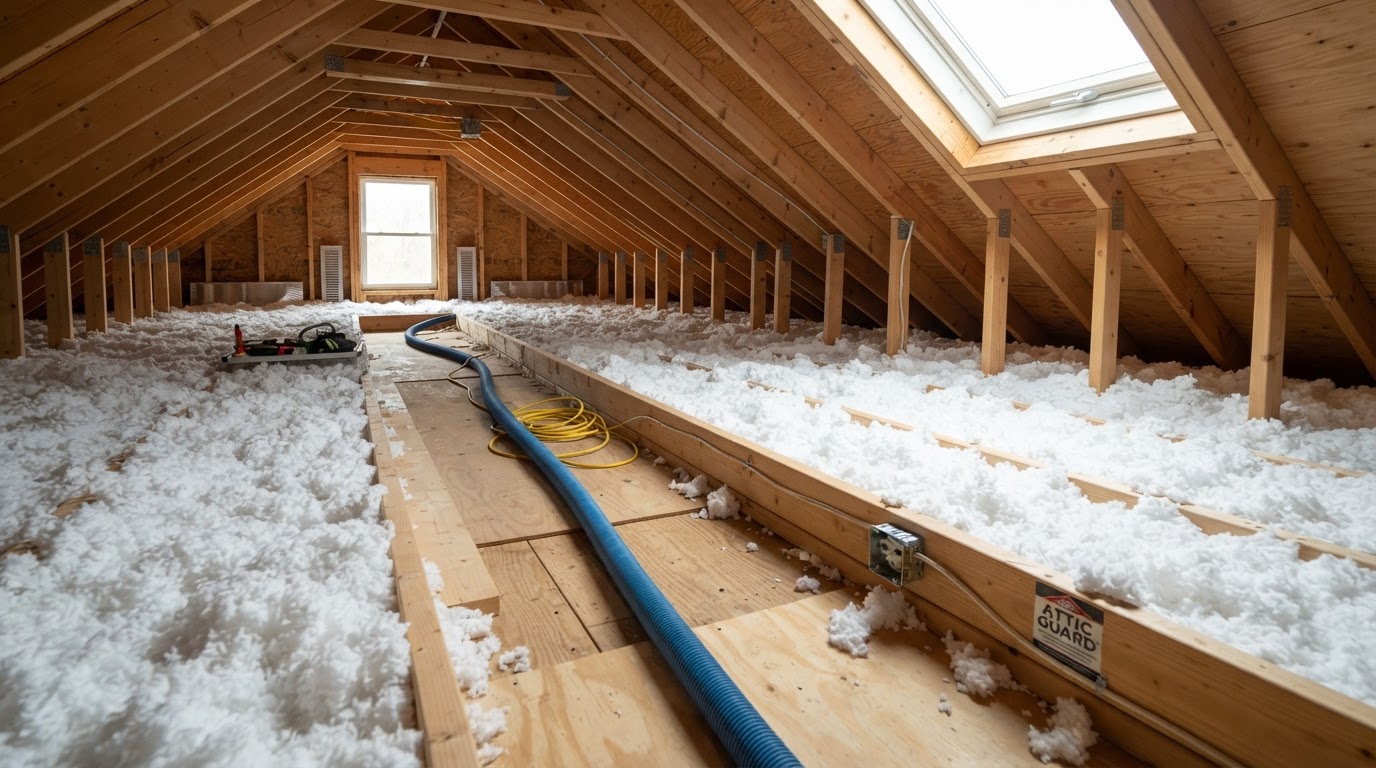
Soiled insulation and nesting material are removed with HEPA-filtered vacuum systems that pull material out through sealed hoses into outside collection bags. This keeps dust, droppings, and fibers out of your living space.
3. Clean and treat affected surfaces, then assess wiring and ducts
With the framing exposed, our technicians treat joists, subflooring, and surfaces with EPA-registered antimicrobial and enzymatic solutions to neutralize bacteria and odor-causing compounds. This is also the point where hidden chewing damage becomes easy to see and document.
4. Repair entry points, then replace insulation when the assessment supports it
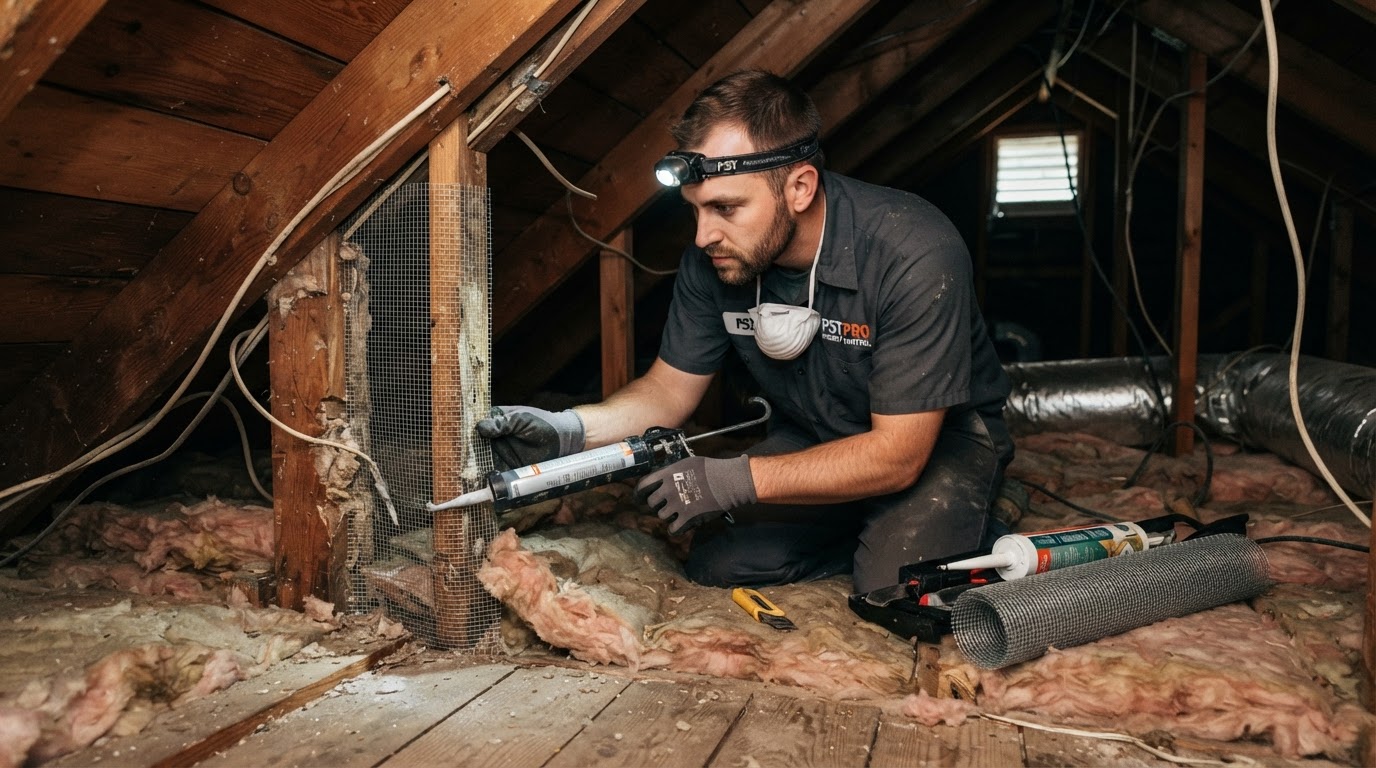
Entry gaps, vents, and roofline transitions are sealed with durable materials such as steel mesh and metal flashing. Our attic rodent proofing service covers this step. Only then does fresh insulation go in, installed to current California energy standards through our attic insulation removal and replacement service. Laying new insulation over a contaminated or unsealed attic just hides the problem.
Ready to restore your attic? Book your free attic cleanup inspection, with same-day service available across Los Angeles.
What Affects Squirrel Attic Cleanup Cost in Los Angeles?
Squirrel attic cleanup cost depends on how much of the attic is affected, how easy it is to access, the condition of the insulation, and how many entry points need repair. There is no honest flat price before an inspection, which is why we inspect first and then recommend exactly what your attic needs.
Access, contamination area, insulation condition, and repair scope
- Attic size and access: low-clearance or hard-to-reach attics take more time.
- Contamination area: a single nest corner is a different job than droppings spread across the whole attic.
- Insulation condition: partial removal vs. full removal and replacement.
- Secondary damage: chewed ducts or other components that need repair or replacement.
- Entry points: the number and location of openings that need sealing.
What to ask for in a written inspection or estimate
- Has the attic been confirmed clear of animals, including young?
- Which areas of insulation need removal, and why?
- What containment and cleaning products will be used?
- Which entry points will be sealed, and with what materials?
- What insulation type and R-value will be installed?
How to Reduce the Chance of Squirrels Returning
Preventing squirrels from returning comes down to two things: closing every entry point after the animals are out, and making the roof harder to reach. Removal and exclusion should be coordinated so no animal is sealed inside.
Have remaining entry points assessed and repaired with suitable materials
Squirrels can chew through soft patches like foam or thin wood. Durable materials such as sheet metal and heavy-duty mesh hold up much better, a point the UC IPM program also makes about excluding squirrels from structures.
Reduce roof access from branches and keep vents in good repair
- Trim branches that overhang or touch the roof.
- Keep vent screens and soffit panels intact and secured.
- Check the roofline after storms or roof work for new gaps.
- Avoid leaving pet food or fallen fruit out where it draws squirrels close to the house.
Key Takeaways
- Daytime scratching and chewed rooflines are the strongest signs of squirrels in an attic.
- Don't handle squirrels or seal an opening while animals or young may still be inside.
- California restricts how tree squirrels can be removed, so use a qualified wildlife professional.
- After removal, the attic still needs inspection, cleanup, sanitizing, sealing, and often new insulation.
- Cleanup cost depends on contamination, access, insulation condition, and repair scope.
Squirrel-in-Attic Questions Homeowners Ask
Will squirrels leave an attic on their own?
Sometimes, but it is risky to wait. Squirrels that find a dry, protected attic often treat it as a long-term nest site, and a female may be raising young there. Even if they leave, the nest, droppings, and scent trails stay behind and can attract new animals. A qualified wildlife professional can confirm whether the attic is truly clear.
Can I seal the hole while squirrels may still be inside?
No. Sealing an entry while squirrels are inside can trap adults or young, leading to fresh chewing damage, distress, or odor problems if an animal dies in the attic. Have a wildlife professional confirm the animals and any young are out, or use a proper exclusion method, before the opening is permanently repaired.
Should attic cleanup happen after wildlife removal?
Yes. Cleanup should come after removal, and new insulation should come after sealing. Cleaning while animals are still active means the attic gets recontaminated, and laying fresh insulation over soiled material traps the problem underneath. The right order is removal, inspection, cleanup and sanitizing, entry repair, then insulation.
Does homeowners insurance cover squirrel damage?
It depends on your policy. Many homeowners policies treat damage from rodents or wildlife as a maintenance issue and exclude it, while some sudden damage may be reviewed differently. Check your policy wording and talk to your insurer before work starts. A documented inspection with photos can help if you do file a claim.
How do I know if it's squirrels or rats in my attic?
Timing is the biggest clue. Squirrels are active during the day, especially early morning and late afternoon, while rats are mostly active at night. Squirrel noise tends to sound like fast scurrying and rolling; rat noise is lighter scratching and gnawing. Entry holes, droppings, and nest material help confirm which animal you are dealing with.
Is it legal to trap and relocate squirrels in California?
California has specific rules for tree squirrels. The California Department of Fish and Wildlife states that wildlife cannot be trapped and released elsewhere, and some species require a permit before they can be controlled. Rules vary by species, so a licensed wildlife control provider is the safest route.
Are squirrel droppings in the attic dangerous?
Squirrel droppings and urine contaminate insulation and framing and can contribute to odors and poor attic air quality. Tree squirrels can also carry parasites such as fleas and mites. Avoid handling droppings or nesting debris without protective equipment, and leave removal to a team that uses containment and HEPA filtration.
How long does attic cleanup after squirrels take?
It depends on the size of the attic and how much contamination and damage there is. A small, localized cleanup can move quickly, while full insulation removal, sanitizing, sealing, and re-insulation takes longer. We give you a clear scope and timeline after the free inspection.
Get Your Attic Back After Squirrels
Squirrels in the attic are a two-part problem. First, a qualified wildlife professional needs to get them out safely and legally. Second, the attic they leave behind needs real restoration: contaminated insulation removed, surfaces sanitized, entry points sealed, and fresh insulation installed in the right order. Skipping the second part is how the smell, the energy loss, and the next animal come back.
Los Angeles Attic Cleanup handles that second part from start to finish across Los Angeles County, from the coast to the valley. Explore our full range of attic cleanup and restoration services, or take the next step now.
Request Your Free Attic Cleanup Inspection or call (877) 706-9839.
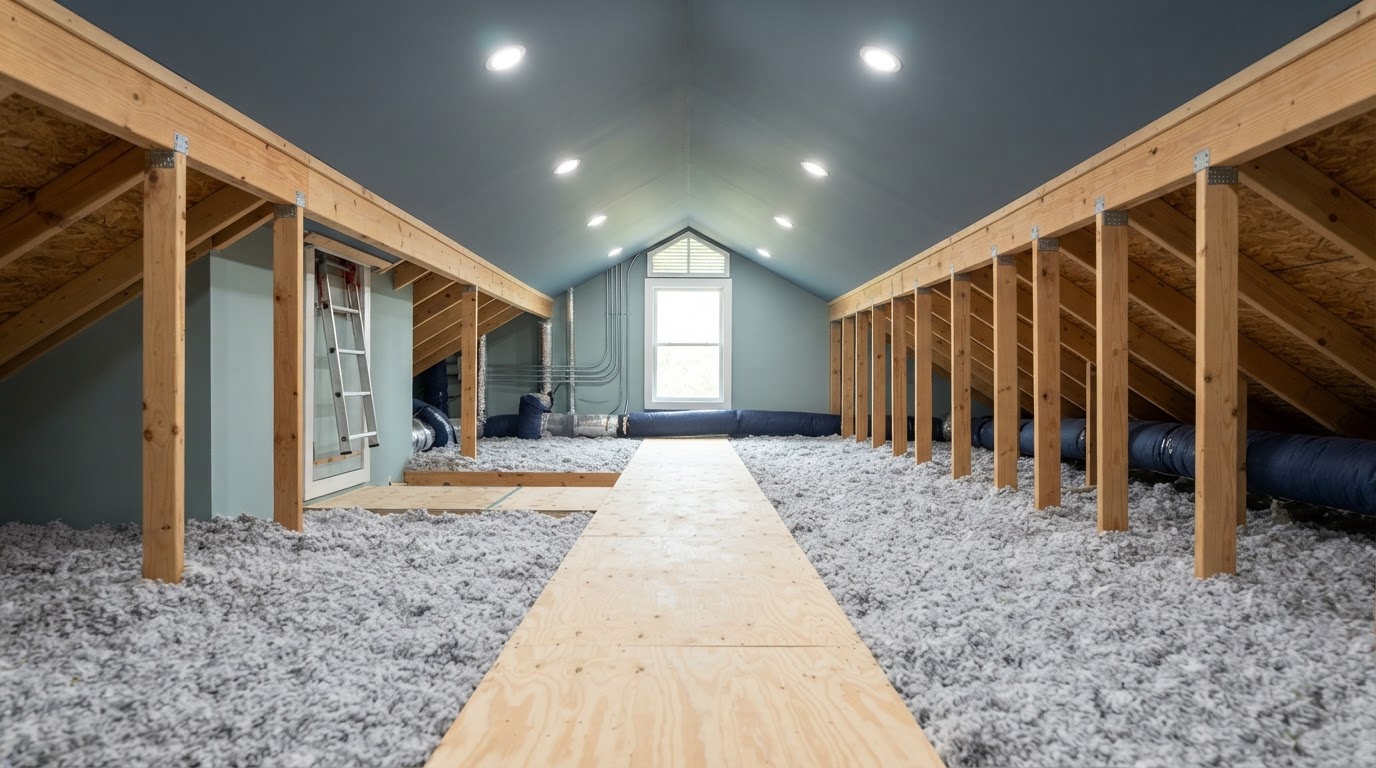
Ready for a clean, safe, energy-efficient attic?
Get a free estimate today. Same-day service available across Los Angeles.