
LA Attic Repair: How to Restore a Problem Attic the Right Way
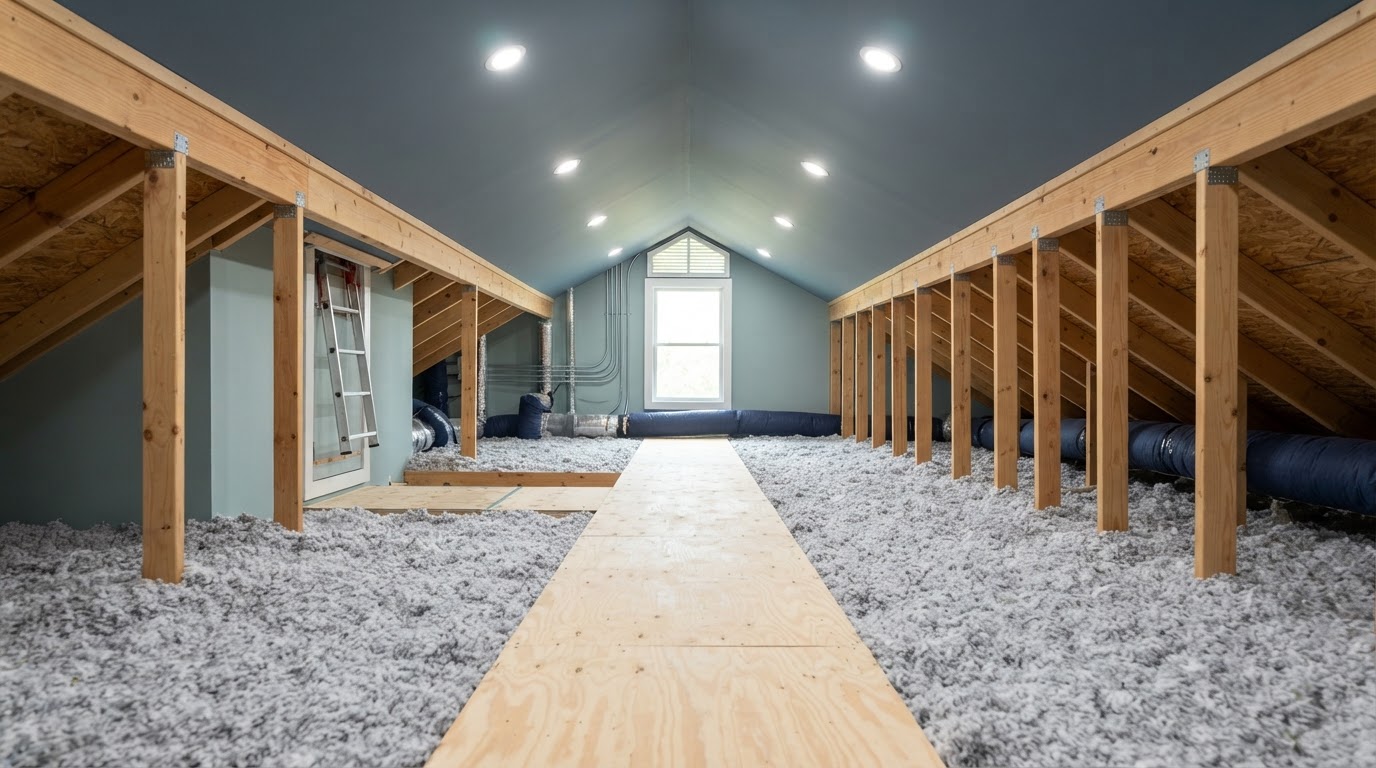
The attic is easy to forget because most homeowners do not spend time there. Yet it sits directly between the living space and the roof, which means small problems above the ceiling can affect comfort, energy performance, indoor conditions, and the durability of the home. LA Attic Repair should therefore begin with a clear inspection rather than a quick assumption about what needs to be replaced.
A hot upstairs room does not automatically mean the answer is more insulation. A musty odor does not automatically mean the insulation is the cause. Dirty insulation can sometimes point to air movement, while wet material can indicate a moisture or roof problem that should be addressed first. The most useful attic work connects the symptom inside the home to what is actually happening in the attic.
Key Takeaways
- Attic work is most effective when the cause is identified before materials are added or removed.
- Air sealing, insulation, ventilation, moisture, safety conditions, and contamination interact as a system.
- Correct repair sequence: Inspect -> Address moisture/safety -> Air seal -> Preserve ventilation -> Clean/restore insulation.
The Attic Is a System, Not a Storage Void
It helps to think of the attic as several systems occupying the same small space. There is the roof structure above, the ceiling of the living area below, insulation between the two, ventilation at the roof or eaves, wiring and sometimes ducts or equipment, plus dozens of small penetrations for lights, pipes, and cables.
A change in one part can affect another. Adding insulation without addressing air leaks can leave conditioned air escaping through hidden gaps. Blocking soffit vents with insulation can interfere with intended airflow. Covering wet material without correcting the moisture source can hide a developing problem.
That is why a useful attic repair starts with diagnosis. The goal is to understand the relationships before choosing the material or service.
Start With the Symptoms You Can See and Feel
Homeowners often notice an attic problem from the rooms below. One bedroom feels hotter than the rest of the house. Cooling seems to run longer than expected. Dust appears around ceiling penetrations. A stain forms on the ceiling. An odor develops near the attic hatch. Pests leave evidence. Insulation looks thin or disturbed.
These symptoms do not all have the same cause. Uneven temperatures may relate to insulation, air leakage, ducts, solar heat, or a combination of factors. A stain may point to a roof leak or another moisture source. Disturbed insulation may come from previous work, air movement, or animal activity.
Write down what you are noticing before the inspection. A simple map of rooms and symptoms can help connect conditions in the living space with the attic above.
Air Sealing Often Belongs Before New Insulation
One of the most important ideas in current ENERGY STAR guidance is sequence. Air leaks through the attic floor should generally be addressed before adding insulation.
Common leakage points can occur around plumbing penetrations, wiring holes, attic hatches, dropped soffits, open framing cavities, recessed fixtures, and other transitions between the conditioned home and the attic. Dirty insulation can sometimes be a clue that air has been moving through the material.
Adding insulation over these pathways may slow heat transfer, but it does not necessarily stop the underlying air movement. Sealing appropriate leaks first can allow the insulation layer to perform as intended. Special care is required around hot flues, combustion equipment, electrical conditions, and fixtures, so the materials and methods must fit the location.
Insulation Is About Performance, Not Just Depth
Attic insulation is commonly discussed in terms of thickness, but performance is described by R value, which measures resistance to heat flow. Different insulation materials provide different thermal resistance per inch, and existing material may be uneven, compressed, contaminated, or displaced.
ENERGY STAR recommends checking insulation levels and notes that an attic with insulation at or below the top of the floor joists may need more. That visual check is useful, but it is not the whole assessment.
Before adding material, look at condition as well as quantity. Wet, moldy, smelly, or animal contaminated insulation may need a different response from clean, dry insulation that is simply below the desired level. Existing insulation does not always need to be removed just because new insulation is being added.
Ventilation Should Not Be Buried Under the Upgrade
Attic ventilation and attic insulation perform different jobs. Insulation resists heat transfer between the living space and attic. Ventilation allows intended outdoor airflow through the attic assembly where the design calls for it.
ENERGY STAR warns against covering soffit vents with insulation. Rafter vents or baffles can help preserve a path for airflow from the soffit area.
This is a good example of why more material is not always better. An attic can have plenty of insulation and still be poorly executed if that insulation blocks ventilation pathways. A repair or upgrade should respect the way the roof and attic were designed to manage heat and moisture.
Moisture Changes the Priority List
Wet or damp insulation deserves attention because the first question is not how quickly it can be covered. The first question is where the moisture came from.
Possible sources can include roof leaks, plumbing issues, condensation, or household exhaust that terminates in the attic instead of outdoors. ENERGY STAR specifically identifies wet insulation, moldy or rotted framing, and kitchen, bathroom, or dryer vents exhausting into the attic as conditions that should be corrected before proceeding with a typical sealing or insulation project.
A good attic repair therefore treats moisture as a cause to investigate, not a cosmetic flaw. Replacing damaged material without fixing the source can set up the same problem again.
Old Insulation Does Not Automatically Mean Bad Insulation
Age alone does not tell you whether insulation must be removed. Material can remain useful if it is dry, clean enough for the intended work, and not creating another problem.
Removal becomes more relevant when insulation is wet, heavily soiled, contaminated by pests, moldy, odorous, or otherwise unsuitable to remain. It may also be moved temporarily to access air leaks or repairs beneath it.
This distinction can prevent unnecessary work. The question should be what condition the insulation is in and whether it supports the planned repair. A good scope of work explains why material is being kept, moved, added to, or removed.
Attic Safety Deserves More Attention Than It Gets
Attics are difficult workspaces. Ceiling drywall is not a walking surface. Roofing nails can project through the roof deck. Summer temperatures can rise quickly. Wiring, ducts, recessed fixtures, flues, and equipment can create hazards that are easy to miss beneath insulation.
ENERGY STAR also warns that some vermiculite insulation may contain asbestos and should not be disturbed unless properly evaluated. Older knob and tube wiring can require special consideration around insulation. Combustion equipment may require safety testing after air sealing because changing building air leakage can affect how appliances draft.
These are strong reasons to stop treating attic work as simply spreading insulation across the floor. The hidden details matter.
Conclusion
A strong LA Attic Repair project should leave the homeowner with a clearer understanding of the attic, not just a list of materials installed. Inspection, correct sequencing, appropriate repairs, and final documentation help turn attic work into a lasting home improvement. Contact Los Angeles Attic Cleanup to discuss the condition of your attic and the next appropriate step.
Frequently Asked Questions
Ready for a clean, safe, energy-efficient attic?
Get a free estimate today. Same-day service available across Los Angeles.