
How to Get Rid of Mice in Your Attic Safely
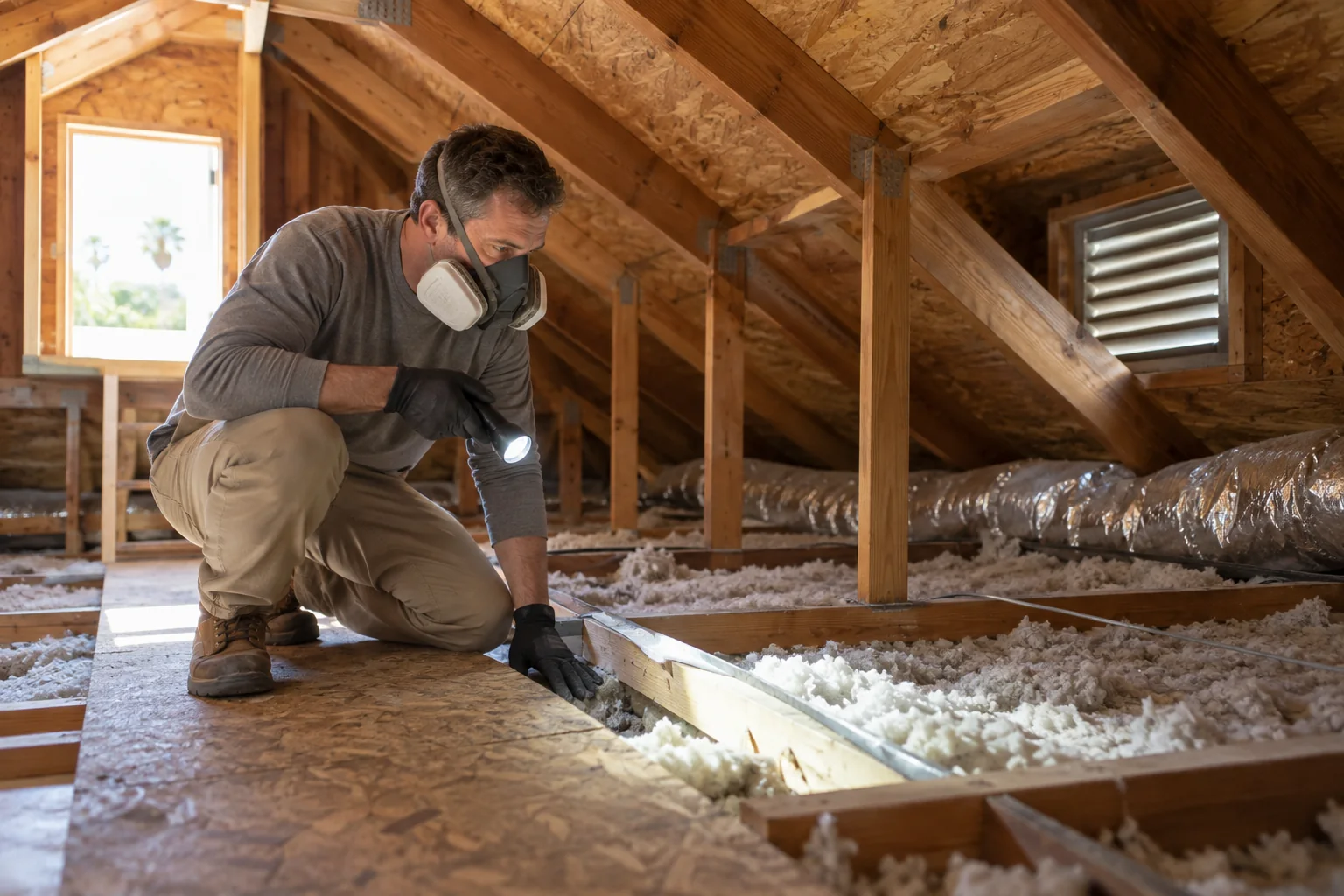
If you're searching for how to get rid of mice in an attic, the reliable approach is to address both the active mice and the openings they used. Start by confirming fresh signs, inspect without disturbing droppings or insulation, choose a safe control plan, and coordinate exclusion with cleanup. Traps alone do not close an entry route, and a quick patch can leave animals inside.
This guide explains what homeowners can check, how to reduce the chance of a repeat problem, and when to stop DIY work. If the attic contains extensive droppings, damaged insulation, or affected ductwork, review Los Angeles attic cleanup and restoration services before entering or disturbing materials.
Quick answer: how to get rid of mice in attic
To get rid of mice in your attic, confirm fresh signs, inspect likely entry points without disturbing droppings or insulation, and choose a control plan that keeps children and pets away from traps or bait. Once active mice are no longer inside, seal access gaps, monitor for new signs, then clean contamination safely.
Use this order of operations:
- Confirm likely mouse activity rather than relying on sound alone.
- Inspect accessible areas and the roofline without stepping on unsupported ceiling surfaces.
- Control active mice safely; do not seal a route if mice may still be trapped inside.
- Close verified openings with durable, rodent-resistant materials and check for new activity.
- Clean droppings and nesting materials only with appropriate precautions; get professional help for heavy contamination, insulation, or ducts.
Need help with the attic itself? Request a free attic estimate from Los Angeles Attic Cleanup for cleanup, insulation, air sealing, duct work, or rodent proofing. The company's site describes these attic services; it does not establish that the company traps or exterminates live mice.
Confirm the signs before choosing a method
Droppings and fresh gnaw marks are stronger clues than a single scratching sound, but no one sign identifies the species or proves that mice are still active. Look for several signs in the same area, and avoid touching or moving suspected waste while you assess the situation.
What signs point to mice in an attic?
Common signs include small droppings, fresh gnaw marks, shredded paper or insulation, tracks in dusty areas, a musky odor, or repeated movement sounds. UC Statewide Integrated Pest Management Program guidance notes that signs can be found near nests and active routes. If the evidence is old, sparse, or difficult to identify, treat the animal as unconfirmed and ask a qualified pest professional.
| What you notice | What it may indicate | Safer next step |
|---|---|---|
| Droppings or urine marks | Rodent activity, but not necessarily the species or whether it is current | Do not sweep or vacuum; photograph from a safe distance and avoid disturbing the area. |
| Fresh gnawing or torn material | A possible access route, feeding point, or nesting area | Look for nearby gaps from a stable, accessible position and keep people and pets away. |
| Scratching or movement at night | Possible animal activity, but sounds alone are not a reliable identification | Check for physical signs and seek help if the attic is inaccessible or the animal is unclear. |
Mice, rats, or another attic animal?
Droppings, noises, and damage can overlap across rodents and other animals, so avoid choosing a removal method from sound alone. If droppings appear unusually large, the noise is heavy, or there are signs of a larger animal, do not handle the animal or block the opening. Get the species and situation assessed first.
How should you inspect an attic and roofline safely?
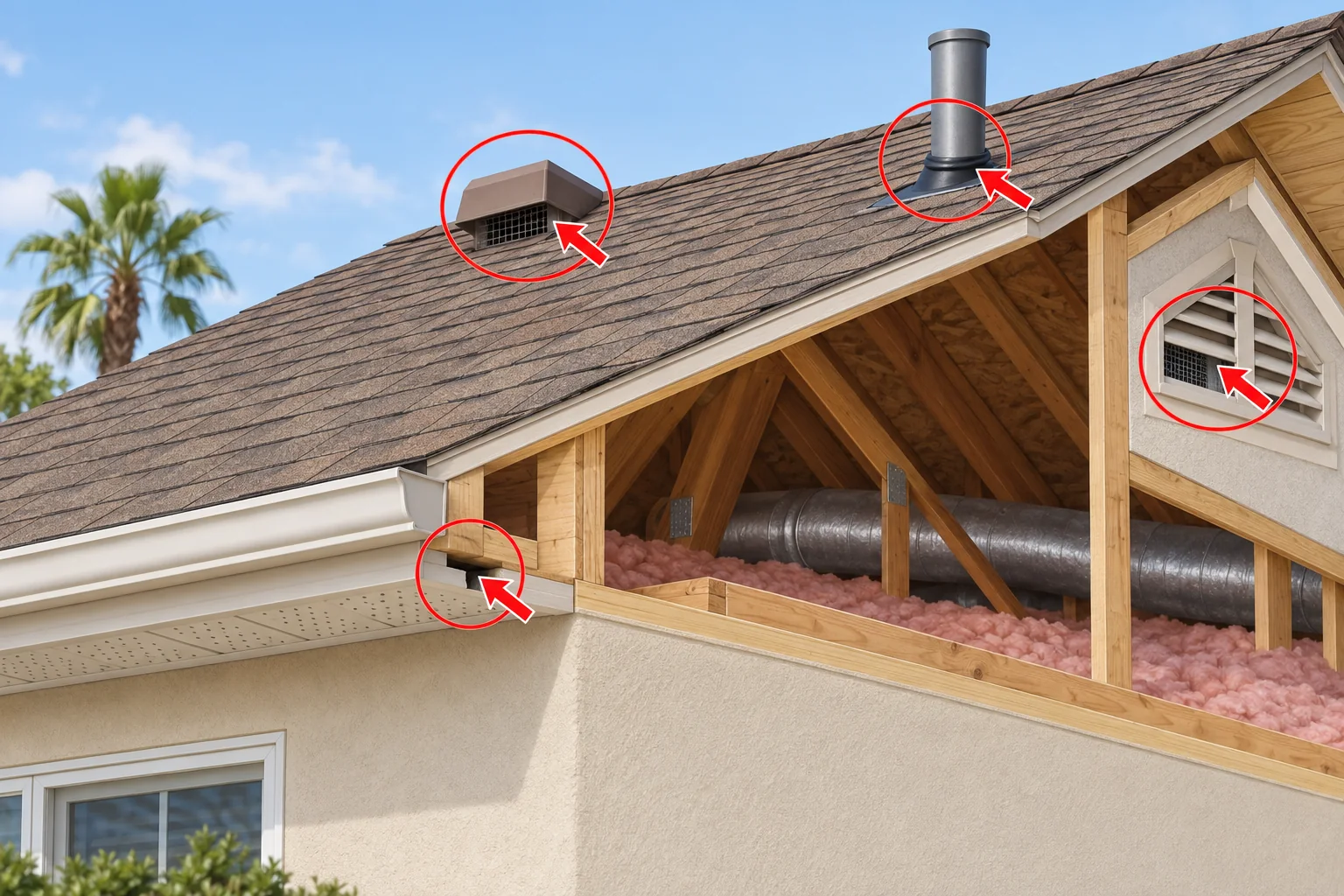
Begin with a ground-level exterior check, then look only into attic areas you can reach safely. Focus on eaves, soffits, fascia, gable and attic vents, roof transitions, and openings around cables or pipes. Do not climb onto a roof, walk on ceiling drywall, or disturb droppings, nests, or insulation to get a better view.
Check the likely entry points
Use a flashlight to look for gaps, loose screens, damaged vent covers, gnawing, or nesting material around the roofline and utility penetrations. The CDC guidance on sealing gaps notes that mice can fit through an opening about the width of a pencil, roughly one-quarter inch. Mark possible gaps from a safe vantage point rather than immediately stuffing or sealing them.
From inside, check accessible edges and the area around the attic hatch, but stay on a stable walkway or structural surface intended for foot traffic. If insulation hides the joists, there is no safe path, or you see widespread droppings, stop. A fall or stirred-up contamination is a bigger problem than a delayed inspection.
Look for secondary damage without touching it
Note displaced insulation, chewed material, moisture, strong odor, or damaged ducts and wiring. Do not pull insulation apart or handle wires. If wiring appears chewed or exposed, keep clear and contact a qualified electrician. If rodent evidence reaches heating or cooling ducts, the CDC cleanup guidance recommends contacting a professional because contaminated ventilation systems require specialized attention.
Control active mice, then close verified entry points
Control and exclusion work together: traps or other appropriate methods address mice already inside, while repairs reduce the chance of new entry. Coordinate the order so you do not seal a suspected route while animals may still be inside a wall or attic void. When the activity is extensive or the route is inaccessible, use a qualified pest-management professional.
Choose a control method with household safety in mind
For a small, accessible problem, UC IPM guidance says snap traps can work well when placed near signs of activity. Follow the manufacturer's directions, check traps frequently, and place them where children, pets, and non-target animals cannot reach them. Do not handle a live or dead mouse barehanded. If the attic is difficult to enter, there are repeated signs, or you cannot safely check traps, do not improvise in the space.
Do not scatter loose rodenticide or use poison as a quick attic fix. A poisoned mouse may die somewhere inaccessible, creating an odor and leaving a carcass inside a wall or insulation. Rodenticide products can also harm children, pets, and wildlife. If considering any pesticide, use only a product legally available for the intended setting and follow its label exactly; get professional guidance when bait access or animal location is uncertain.
Seal only after you know animals are not trapped inside
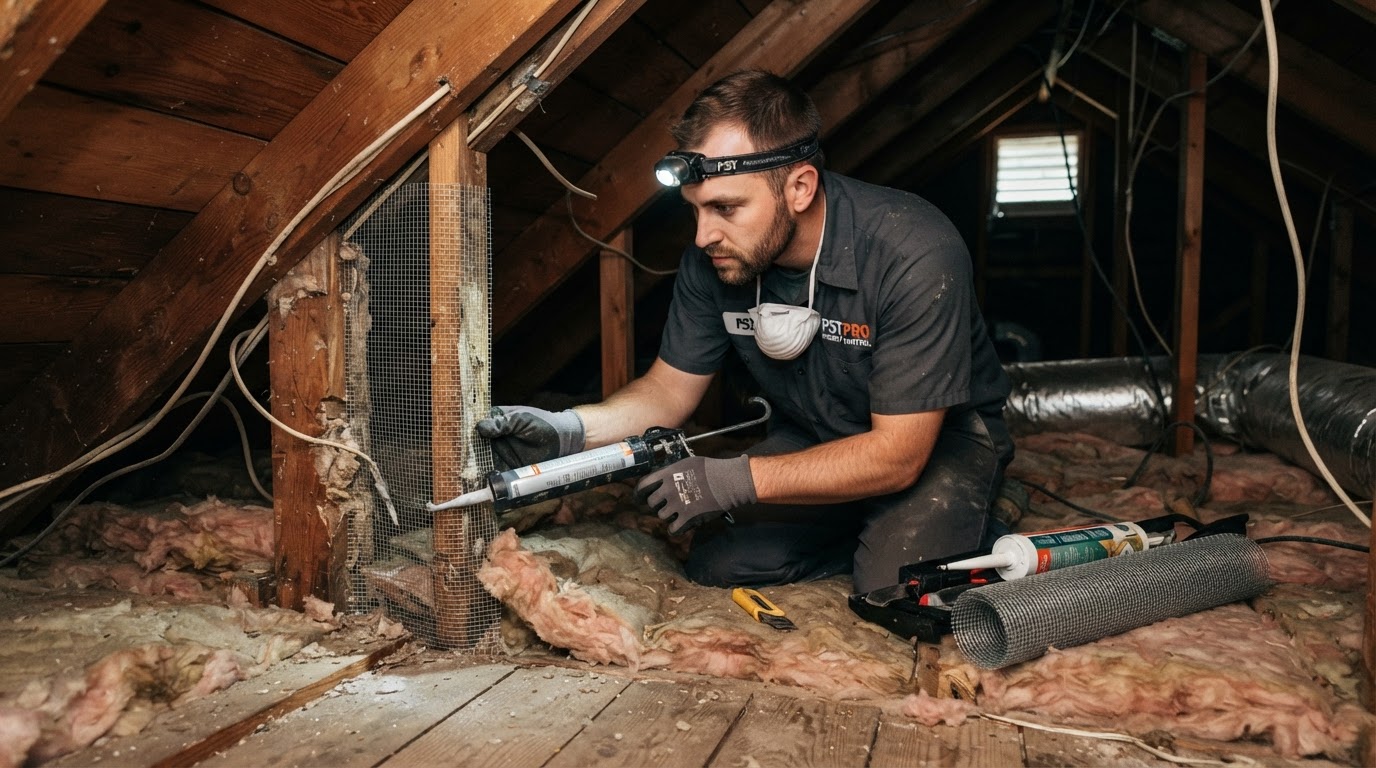
Once active mice are controlled and the entry route is understood, repair the openings with materials suited to the size and location. The CDC sealing guidance recommends steel wool for small gaps, secured with caulk, and metal, hardware cloth, cement, or similar durable materials for larger openings. UC IPM guidance cautions that expanding foam, plastic, wood, and other chewable materials alone are not reliable mouse barriers.
Vents need screening that blocks rodents without restricting airflow. Around pipes, wiring, roofline transitions, and soffits, the repair should fit tightly and remain weather-appropriate. If the opening is high, structural, or near electrical equipment, leave the repair to a qualified contractor. Los Angeles attic rodent-proofing service information describes inspection and sealing of attic entry points.
Monitor after control and proofing
Keep a simple record of where you saw signs and when. After the area has been safely cleaned, new droppings or fresh gnawing can indicate ongoing activity. Recheck the same routes and confirm that repaired vents and gaps remain intact. If signs continue, revisit the control plan rather than repeatedly patching a single opening.
Clean droppings and contaminated attic materials safely
Rodent waste can contaminate surfaces and become airborne if it is disturbed. The CDC rodent cleanup guidance is clear: never sweep or vacuum droppings, urine, or nesting materials. For small, accessible contamination, follow current public-health directions and product labels; for heavy infestation or contaminated insulation, stop DIY cleanup and arrange qualified help.
Use wet-cleaning precautions for small, accessible areas
Before cleanup, ventilate the area as directed by CDC cleanup guidance. Wear rubber or plastic gloves. Wet droppings and urine with an appropriate disinfectant, allowing the full contact time stated on its label, then wipe up with disposable material and disinfect hard surfaces. Wash hands thoroughly after removing gloves. Never mix cleaning chemicals, and do not use a vacuum or dry broom on rodent waste.
These steps are not a substitute for professional remediation in a heavily contaminated attic. Do not disturb dusty nests or sweep across insulation. If you have already stirred up waste, leave the area and use the CDC cleanup page or local public-health guidance to decide what to do next.
When does insulation or ductwork need professional assessment?
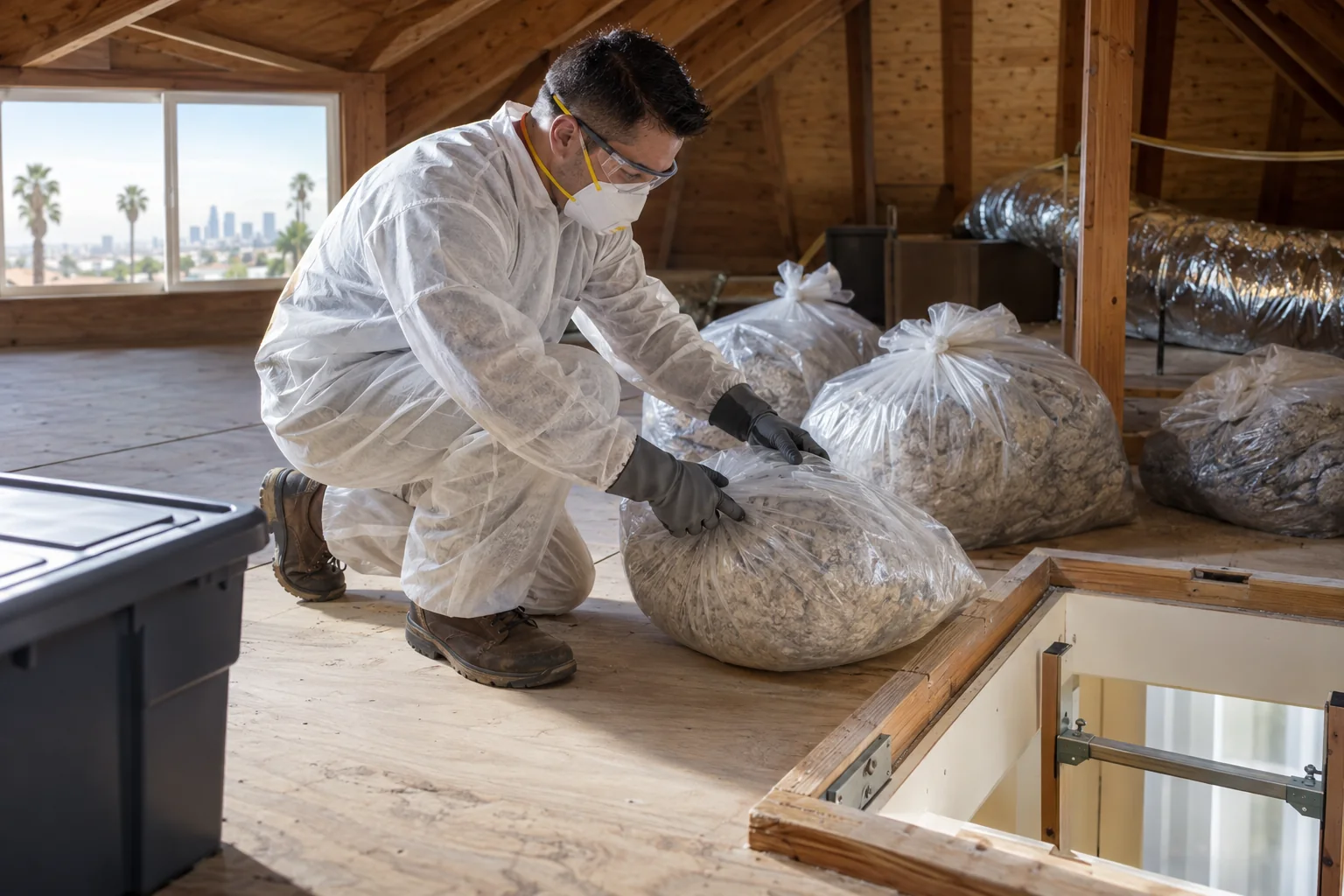
Insulation with visible droppings, urine, nesting, odor, or extensive damage may need removal or replacement, but the right scope depends on how much material is affected and how accessible it is. Do not shake, brush, or vacuum contaminated insulation yourself. Rodent evidence inside a duct system is also a reason to stop and seek professional assessment. Attic insulation services in Los Angeles describe removal and replacement options, while duct repair and replacement services address damaged or contaminated ductwork.
How can you keep mice from returning to a Los Angeles attic?
Prevention means maintaining the whole route, not just filling the first visible hole. After active mice are addressed, inspect roofline gaps and vent screens, keep stored materials orderly, and reduce nearby food and shelter that can support rodents. Recheck the attic after repairs, especially if new signs appear.
- Keep food, bird seed, and pet food in tightly closed containers; clean up spills and secure household garbage.
- Remove unnecessary cardboard, paper, and clutter that can provide nesting material, while avoiding contaminated items.
- Keep shrubs and branches from touching the house and clear debris around exterior walls.
- Inspect vents, soffits, eaves, and utility openings for gaps or damaged screens.
- After attic work, monitor for fresh droppings, gnawing, or recurring odors rather than assuming one repair solved every route.
The CDC and UC IPM both emphasize sealing openings and reducing accessible food and shelter. For air leaks around attic penetrations, Los Angeles attic air-sealing services may be relevant, but pest exclusion and air sealing are related yet distinct jobs: the repair must use a material and method appropriate to the opening.
When should you call an attic professional in Los Angeles?
Call for qualified help when you cannot safely reach the signs, activity continues after basic control, droppings or nests are widespread, insulation is contaminated, ductwork is affected, or wiring appears damaged. Use a pest-management professional for active mice and a qualified electrician for wiring concerns; use an attic cleanup specialist for contamination, insulation, air sealing, or proofing needs.
Before approving work, ask what areas will be inspected, how the company will avoid spreading contamination, whether insulation or ducts need a separate assessment, how entry points will be mapped, and what is included in the estimate. A clear scope should distinguish active mouse control from attic cleanup and proofing. Los Angeles Attic Cleanup's website describes attic inspection, cleanup and decontamination, insulation, air sealing, duct repair or replacement, and rodent proofing; it does not confirm live mouse trapping or extermination.
If you need help assessing attic contamination or sealing and restoration needs, request a free attic inspection and estimate from Los Angeles Attic Cleanup. For a broader view of the company's services, visit the Los Angeles Attic Cleanup home page or call (877) 706-9839.
Common questions about mice in an attic
How do mice get into an attic?
Mice can enter through small openings around roof vents, soffits, eaves, roof transitions, and utility lines. The CDC says a mouse can fit through a gap about one-quarter inch wide. Check exterior access points from the ground or use a qualified professional for high or unsafe areas; do not climb onto a roof to inspect a suspected opening.
Should I put poison in my attic?
Poison is not a simple first step for an attic because a mouse may die in an inaccessible void, and bait can expose children, pets, or wildlife. If you consider a rodenticide, follow its label exactly and get qualified advice about the location and risks. Trapping and exclusion should be planned around the actual signs and access route.
Can I vacuum mouse droppings in the attic?
No. The CDC cleanup guidance says not to sweep or vacuum rodent droppings, urine, or nesting material because this can put contaminated particles into the air. For small, accessible waste, follow CDC wet-cleaning steps and disinfectant label directions. If the attic has heavy contamination, loose insulation, or affected ducts, leave the area and get professional guidance.
Does mouse-contaminated attic insulation always need replacement?
Not every attic needs the same scope. The amount, location, and condition of the affected insulation matter, as does whether droppings, urine, odor, or nesting material have spread through it. Do not shake or vacuum suspected material. A qualified attic assessment can determine whether localized removal, broader replacement, or other cleanup is appropriate.
How can I tell if the mice are gone?
There is no single sound or sign that proves an attic is clear. After active mice are controlled and the area is safely cleaned, monitor for fresh droppings, gnaw marks, or new nesting material. If evidence returns, recheck the route and control plan. Persistent activity or inaccessible spaces are reasons to get a professional assessment.
Will sealing the attic keep mice out?
Sealing verified openings can reduce re-entry, but it works best as part of a plan that addresses active mice, contaminated materials, and all accessible routes. Use durable, rodent-resistant repairs suited to each gap and keep vent airflow clear. Do not close a suspected opening until you know mice are not trapped inside.
Who should I call for mice in a Los Angeles attic?
For active mice, contact a qualified pest-management professional. For contaminated insulation, attic cleanup, air sealing, duct damage, or proofing, ask an attic specialist what is included. If wiring is chewed or exposed, keep clear and contact an electrician. Confirm that each provider handles the specific part of the problem you need solved.
Key takeaways
- Confirm physical signs; sounds alone do not identify mice.
- Inspect from safe, stable locations and do not disturb droppings or insulation.
- Control active mice before closing routes, and monitor for fresh signs.
- Use durable materials for verified gaps; foam alone is not a reliable rodent barrier.
- Never dry sweep or vacuum rodent waste; stop DIY work for heavy contamination, insulation, ducts, or wiring concerns.
A safe plan for mice in your attic
The practical answer to how to get rid of mice in your attic is to connect identification, safe control, exclusion, monitoring, and cleanup. Skipping a step can leave active mice inside, leave contamination behind, or leave the same entry route open. Keep the work within safe limits and use the right professional for each issue.
For attic cleanup, insulation, air sealing, duct repair or replacement, and rodent proofing in Los Angeles, request a free inspection and estimate from Los Angeles Attic Cleanup or call (877) 706-9839.
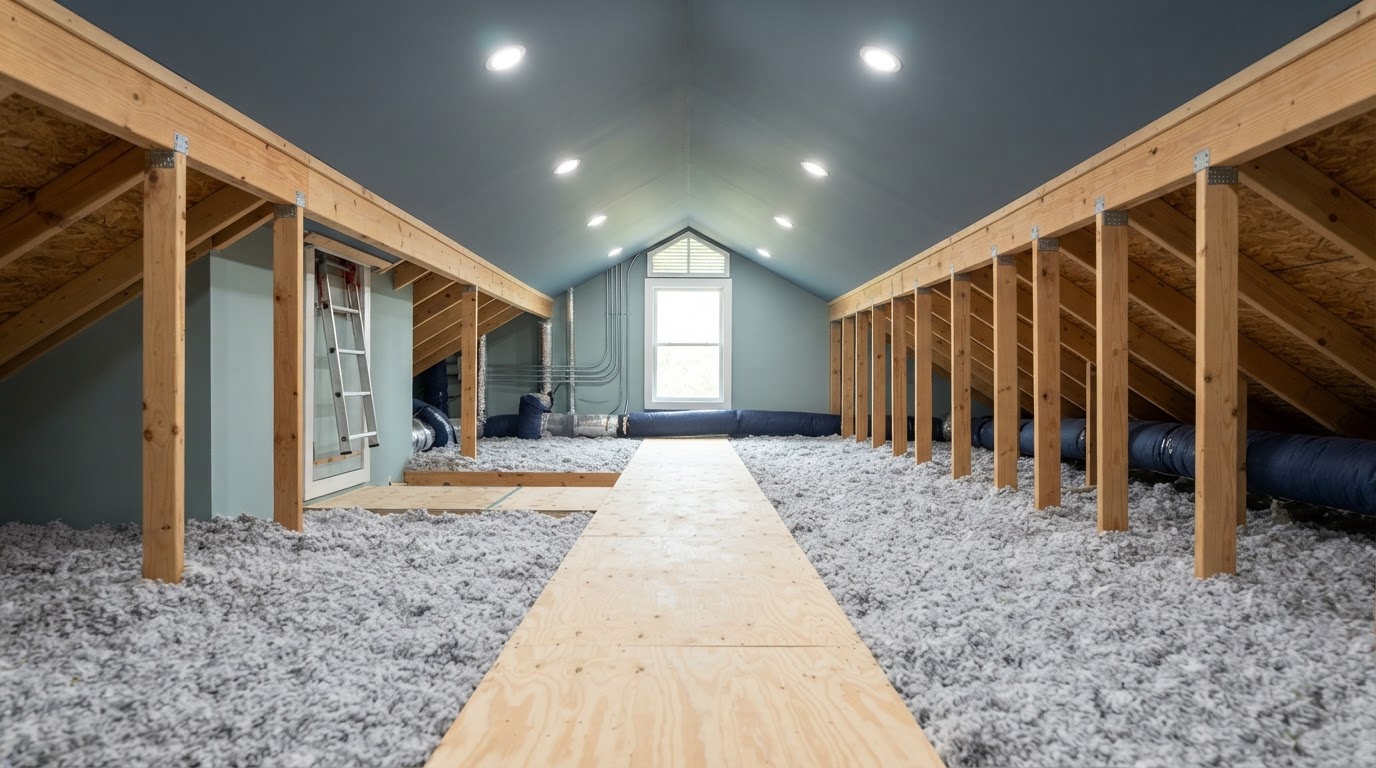
Ready for a clean, safe, energy-efficient attic?
Get a free estimate today. Same-day service available across Los Angeles.