
How Much Does Attic Storage Renovation Cost in Los Angeles?
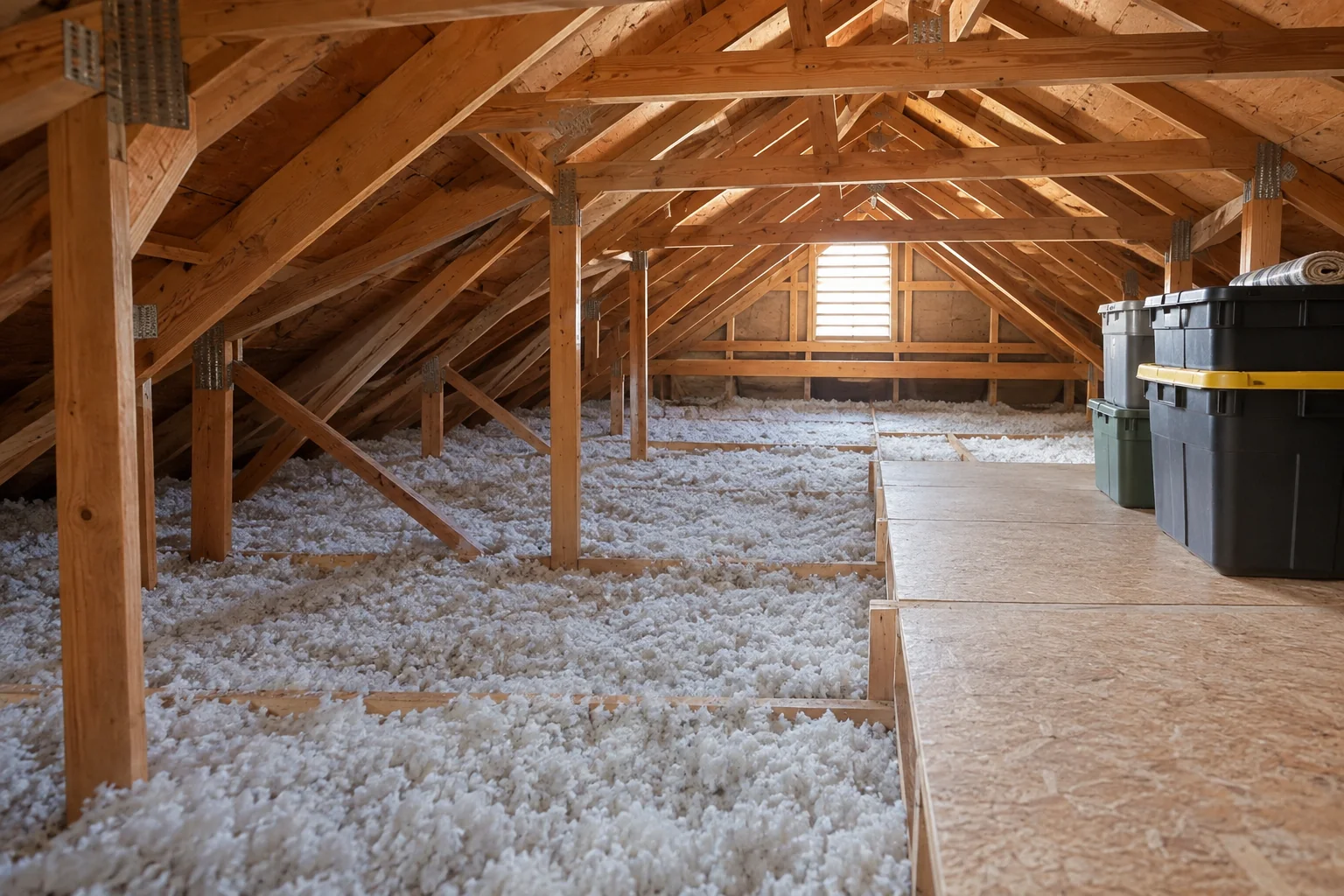
Turning an attic into usable storage sounds simple: put down some plywood, add a light, start moving boxes up. In practice, the attic storage renovation cost for a Los Angeles home depends far more on what is already up there than on the plywood. Old insulation, rodent droppings, air leaks, tight access, and the condition of the framing all shape the final number.
This guide breaks the budget into the scopes that actually show up on quotes, explains which ones change the price most, and shows where a storage upgrade stops and a permitted living-space conversion begins. If your attic needs cleanup or insulation work before it can hold anything, our attic services in Los Angeles cover that first, essential layer.
How Much Does Attic Storage Renovation Cost in Los Angeles?
Short answer: Published estimates for a storage-only attic upgrade generally run from about $5,000 to $25,000, with Los Angeles projects often landing at the higher end because of local labor costs. Simple decking over clean, sound framing sits at the low end. Cleanup, insulation replacement, new access, lighting, and structural reinforcement push the total up.
Those ranges come from national and regional cost guides rather than one fixed LA price. National cost guides list basic attic storage at roughly $4,800 to $22,000, and one major home-services marketplace lists Los Angeles storage projects at roughly $5,450 to $25,000. Some local contractors publish higher storage-upgrade figures because their scope includes structural work and finishes. The spread is wide because each source bundles different work into "storage."
Los Angeles Attic Cleanup inspects first and prices the prep work your attic actually needs. Request a free attic estimate or call (877) 706-9839 before you budget for decking.
Storage-only work versus a finished living space
A storage attic is an unconditioned space that holds boxes, seasonal items, and luggage. It may get a floor, a light, and better access, but nobody sleeps or works there. A finished living space adds walls, ceilings, HVAC, egress, stairs built to code, and often plumbing. National guides commonly place full attic conversions in the tens of thousands of dollars, well above storage-only work. Keeping the two separate is the single best way to read quotes accurately.
What this guide's estimates include and exclude
The ranges here cover storage-focused work: cleanout, insulation, air sealing, rodent proofing, raised decking or subfloor, basic lighting, and improved access. They exclude bedroom or office conversions, bathrooms, new HVAC zones, dormers, and roof changes. Prices also vary with home age, attic height, and site access, so treat every figure as a planning range, not a quote.
Attic Storage Costs by Project Scope
Most storage projects are really four or five smaller jobs stacked together. Pricing them separately makes it much easier to compare bids and spot what a low quote leaves out.
| Scope | What it usually includes | Relative cost impact | Who typically does it |
|---|---|---|---|
| Cleanout and decontamination | Debris removal, droppings cleanup, sanitizing, disposal | Low to medium; higher with rodent contamination | Attic cleanup specialist |
| Insulation removal and replacement | Bagging old or contaminated material, installing fresh insulation at the right R-value | Medium; scales with attic size and depth | Attic cleanup or insulation contractor |
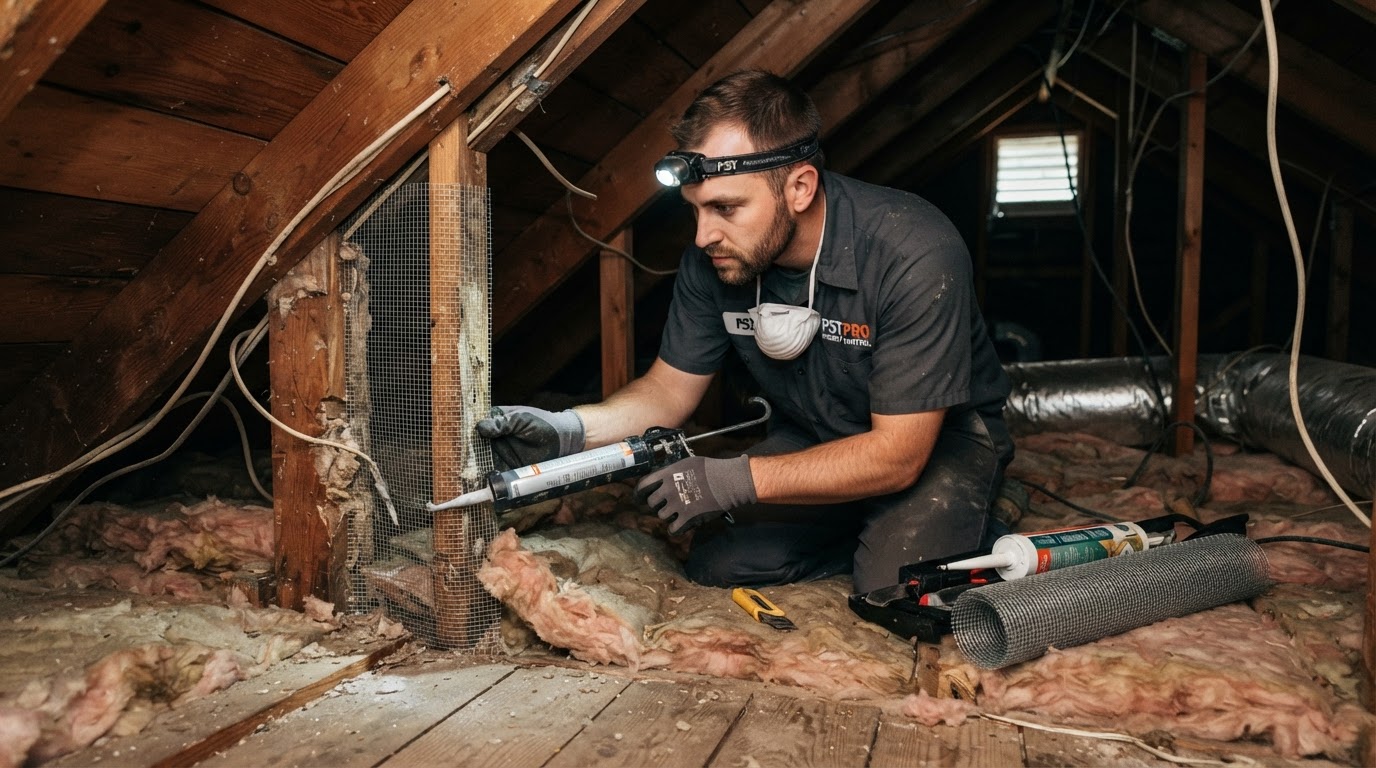
| Air sealing and rodent proofing | Sealing penetrations and entry points before anything is covered | Low to medium | Attic cleanup specialist |
| Raised decking or subfloor | Risers, plywood or OSB panels over the joists | Medium; scales with square footage | General or framing contractor |
| Lighting and electrical | Fixtures, switches, outlets | Low to medium | Licensed electrician |
| Access upgrade | New pull-down ladder or enlarged hatch | Low to medium; permanent stairs are much higher | General contractor |
| Structural reinforcement | Sistering joists, engineering review | High; varies by framing type | Engineer plus licensed contractor |
Cleanout and debris removal
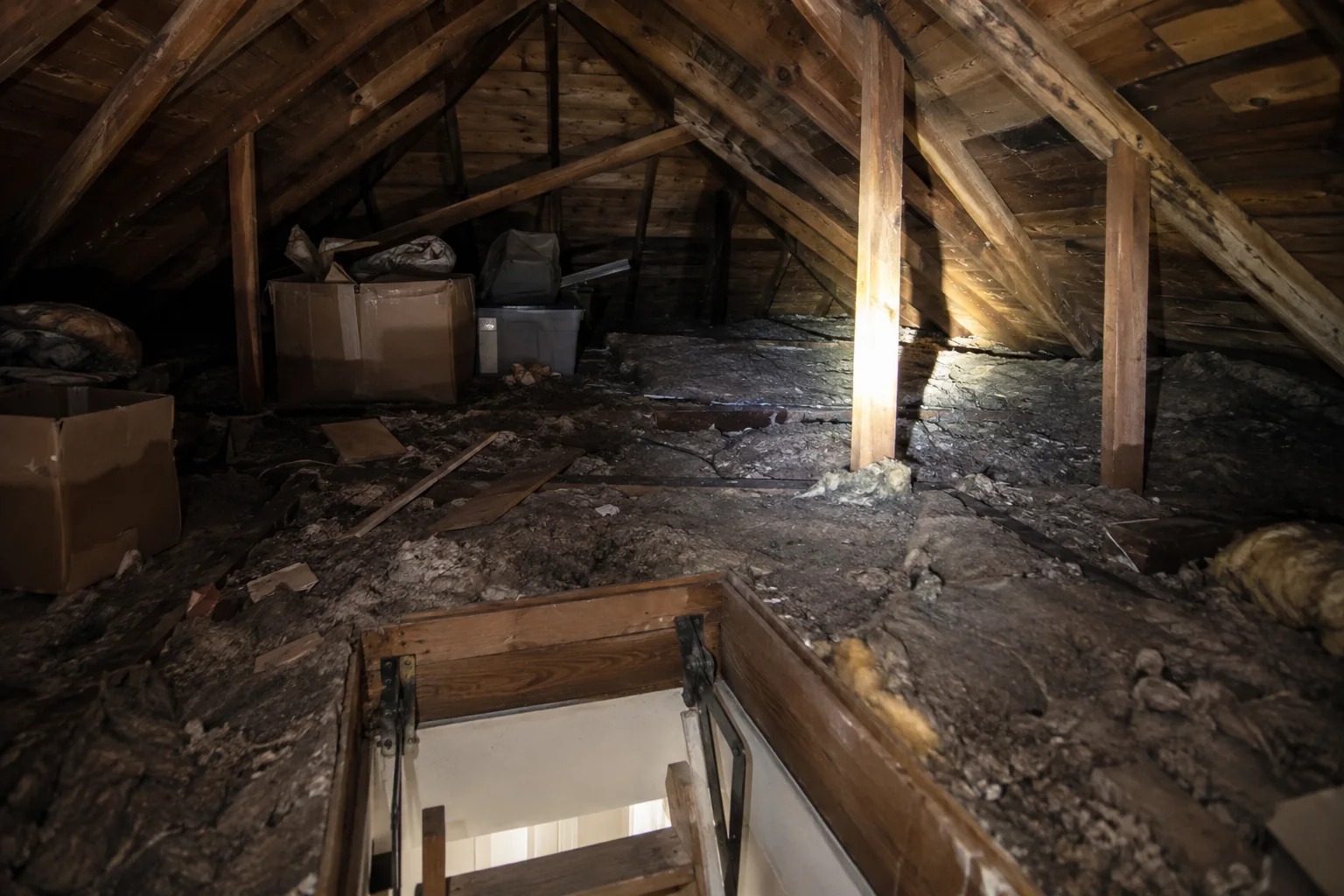
Every storage project starts with an empty, clean attic. Old boxes, construction scraps, and dust are the easy part. Rodent droppings, nesting material, and urine-soaked insulation are not, because they need careful removal and sanitizing before anyone stores belongings there. Cleanup cost rises with contamination level, attic size, and how difficult it is to carry material out.
Floor assessment, subfloor, and raised decking
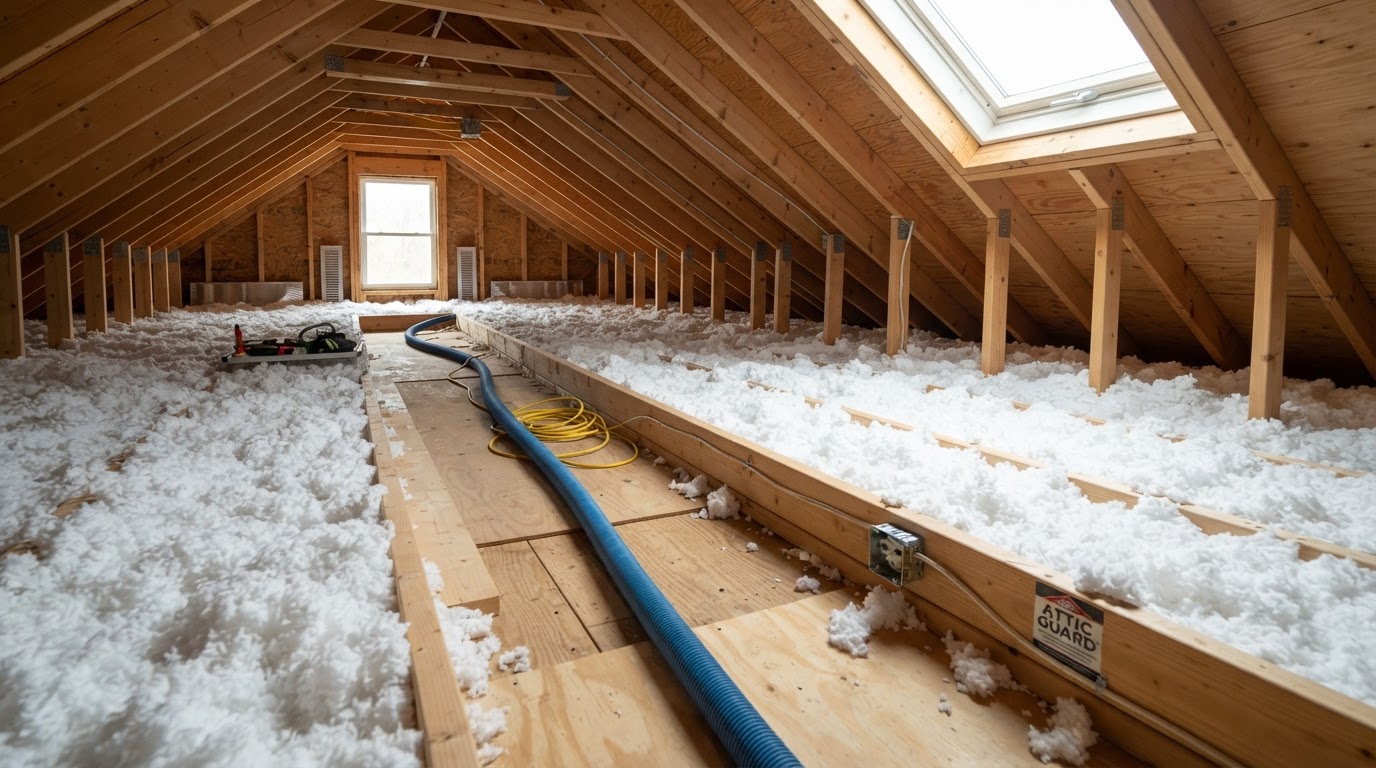
Plywood or OSB panels create the actual storage surface. In many homes the ceiling joists were sized to hold drywall, not stacks of heavy boxes, so someone qualified needs to confirm they can carry the intended load. Raised decking systems lift the floor above the insulation on risers, which costs more than laying panels directly on the joists but protects insulation performance.
Insulation, ventilation, lighting, and shelving
Insulation is the line item homeowners most often underestimate. If the existing material is thin, settled, or contaminated, it should be addressed before the floor goes down, because replacing it later means pulling up the decking. Our attic insulation removal and replacement service handles that step. Many LA homeowners also add a radiant barrier at this stage to reduce attic heat, which helps protect stored items in summer. Lighting and simple shelving are smaller costs but add up across a large attic.
When structural repairs or new access change the budget
Two items can swing a storage budget by thousands. The first is structural: undersized joists, damaged framing, or engineered trusses that are not designed for floor loads may need an engineer's review and reinforcement. The second is access. A new pull-down ladder is a modest upgrade, while cutting in permanent stairs is a construction project in its own right, often with permit and layout implications.
What Changes the Price of Attic Storage Work?
Two attics with the same square footage can produce very different quotes. These are the variables that drive the difference.
Usable square footage, framing, and expected storage load
Usable area is the part of the attic with enough headroom to reach and stack items, not the whole footprint. Low-pitch roofs common in many LA ranch homes leave less usable space than steep Craftsman or Tudor roofs. Truss framing, with its web of diagonal members, also limits where decking can go. The heavier the planned storage, the more important a qualified load assessment becomes.
Existing insulation, air movement, and moisture conditions
Clean, dry insulation at a good depth may only need protection. Wet, moldy, or rodent-damaged insulation needs removal and replacement first. Dirty streaks in insulation can point to air leaks from the living space, and stains on framing can signal roof or exhaust moisture. Our guide to restoring a problem attic the right way explains why those causes should be fixed before anything is covered.
Hatch, pull-down ladder, or permanent stairs
Access sets the practical limit on what you can store and how quickly work gets done. A small closet hatch slows every trip for crews and homeowners alike, which can add labor time. Upgrading to a pull-down ladder is common. Permanent stairs move the project closer to renovation territory and usually require more planning.
Electrical work, permits, disposal, and site access
New circuits and fixtures should be handled by a licensed electrician. Disposal fees cover hauling away old insulation and debris. Tight driveways, multi-story homes, and hillside lots can add labor. Permits depend on the exact scope and on which jurisdiction governs your property.
Why Insulation Comes Before the Storage Floor
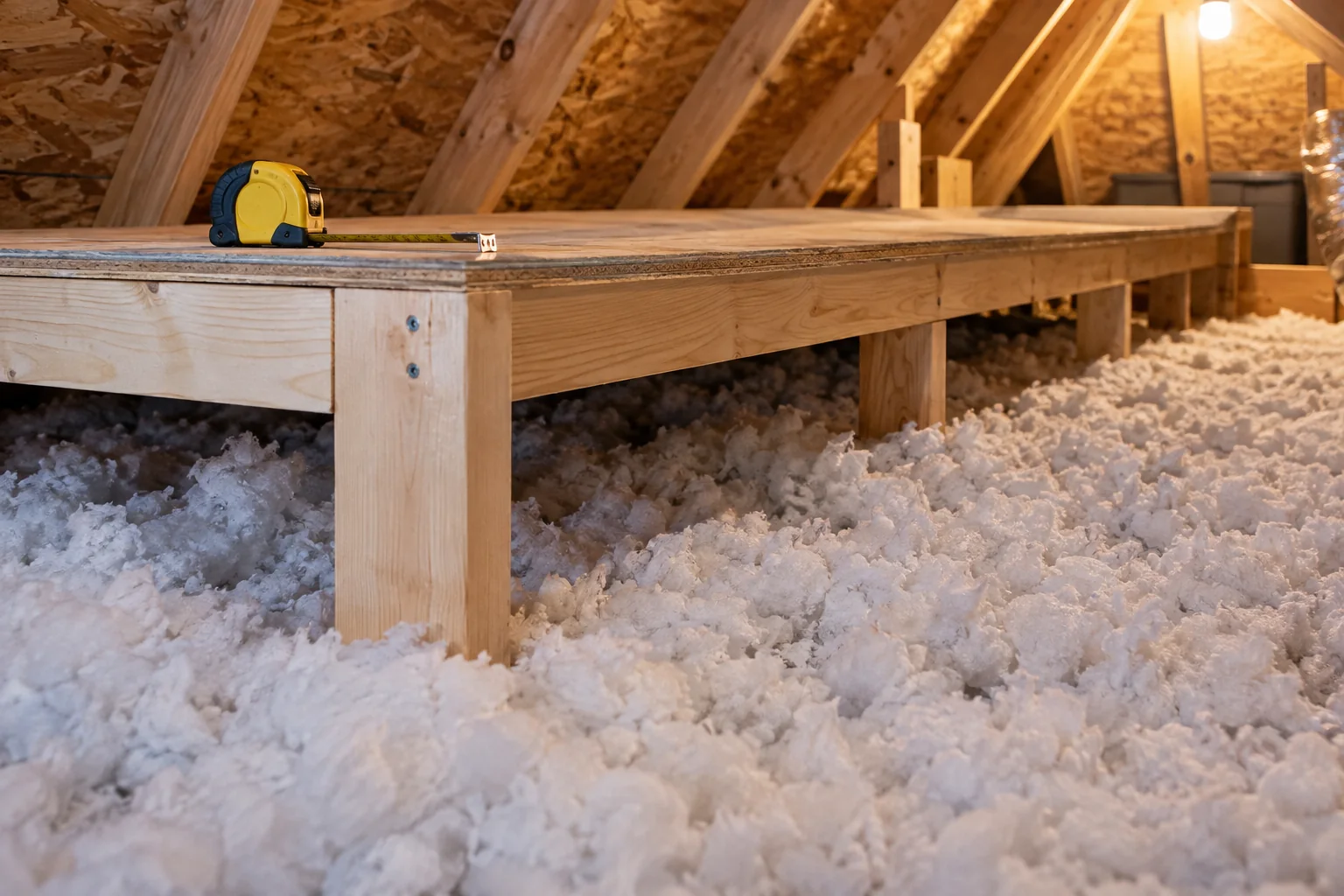
The most expensive storage mistake is laying plywood straight onto the joists over insulation that is deeper than the joists. The panels squash the insulation flat. According to the U.S. Department of Energy's insulation guidance, insulation that is compressed will not provide its full rated R-value. That means a storage floor installed carelessly can quietly raise cooling bills for years.
The better sequence looks like this:
- Inspect the attic for contamination, moisture, air leaks, and framing condition.
- Clean out debris and remove damaged or contaminated insulation.
- Seal air leaks and rodent entry points with attic air sealing and rodent proofing.
- Install fresh insulation at the appropriate depth.
- Build raised decking that sits above the insulation rather than on it.
- Add lighting, shelving, and access upgrades.
Doing steps one through four first costs less than tearing out a finished floor later to fix a rodent or insulation problem underneath it.
Storage Renovation Versus Legal Living-Space Conversion
The line between storage and living space matters for both budget and permits. Once an attic is meant for people rather than boxes, building codes treat it very differently.
Which changes may trigger plans, permits, or inspections
Electrical circuits, new stairs, structural changes, and any change in how a space is used can require permits. Within the City of Los Angeles, the Los Angeles Department of Building and Safety (LADBS) handles plan review, permitting, and inspections, and it lists some simple projects as eligible for express permits without plan review. Many LA County cities, such as Pasadena, Glendale, and Burbank, run their own building departments. Confirm the requirements for your address with the correct agency or a licensed contractor before work starts.
Why bedrooms, bathrooms, and HVAC require separate budgeting
Habitable rooms need things a storage attic does not: minimum ceiling heights, emergency egress, code-compliant stairs, conditioned air, and fire safety measures. Plumbing for a bathroom adds another trade. Treat any of these as a separate renovation budget with a licensed general contractor rather than an add-on to a storage quote.
How to Estimate Your Attic Storage Budget
A little preparation makes quotes more accurate and easier to compare.
Measure usable area and document access
Note the attic footprint, the area with comfortable headroom, and the size and location of the hatch. Take photos of the insulation, any droppings or stains, and the framing from the access opening. Avoid walking on the ceiling drywall between joists.
Record the requested scope and quote exclusions
Write a simple scope list so every contractor prices the same work:
- Cleanout and decontamination needed: yes or no
- Insulation: keep, top up, or remove and replace
- Air sealing and rodent proofing
- Decking area and raised versus direct-on-joist
- Lighting and outlets
- Access upgrade
- Structural review requested
Compare bids by labor, materials, disposal, and permits
Ask each contractor to separate labor, materials, disposal, and permit allowances. A bid that looks cheap often skips cleanup, leaves old insulation in place, or assumes the framing is fine without checking. Build in a contingency for surprises found once work begins.
Not sure what your attic needs before storage? Schedule a free attic inspection and get a clear prep scope you can share with any contractor.
How to Avoid Unsafe or Incomplete Attic Quotes
Ask who evaluates the floor structure
A storage quote should state who confirmed that the joists or trusses can carry the planned load. If nobody has, ask for a qualified review before approving decking.
Confirm insulation will not be compressed by new decking
Ask how the floor will sit relative to the insulation. Raised risers or a decking system designed for insulated attics help protect performance.
Verify contractor qualifications and permit responsibilities
Check that each contractor holds the right license for the work, carries insurance, and states in writing who pulls any permits. The California Contractors State License Board offers a public license lookup.
Key Takeaways
- Published attic storage renovation costs generally range from about $5,000 to $25,000, with LA often at the higher end.
- Cleanup, insulation, air sealing, and rodent proofing should happen before any storage floor goes down.
- Compressed insulation loses performance, so raised decking is usually the smarter choice.
- Storage and living-space conversions are different projects with different budgets and permit paths.
- Compare quotes line by line using the same scope list.
Plan Your Attic Storage Project the Right Way
The real attic storage renovation cost in Los Angeles comes down to what your attic needs before it can safely hold anything. A clean, sealed, properly insulated attic is the foundation for a storage floor that lasts and does not drive up your energy bills. Los Angeles Attic Cleanup handles that foundation: cleanup and decontamination, insulation removal and replacement, air sealing, and rodent proofing across greater Los Angeles. Decking, framing, and electrical work should go to qualified contractors for those trades.
Get your free attic estimate today or call (877) 706-9839 and find out exactly what your attic needs before you start storing.
Frequently Asked Questions About Attic Storage Cost
Is attic storage renovation cheaper than converting an attic to a bedroom?
Yes, usually by a wide margin. Storage work covers cleanup, insulation, decking, lighting, and access in an unconditioned space. A bedroom conversion adds walls, HVAC, egress windows, code-compliant stairs, and often structural work, which national cost guides place far above storage-only budgets. Price each project separately so quotes stay comparable.
Does attic flooring need structural reinforcement?
Sometimes. Many ceiling joists were sized to support drywall, not heavy storage, and engineered trusses are often not designed for added floor loads. Whether your attic needs reinforcement depends on the framing type, spacing, span, and planned weight. A qualified engineer or licensed contractor should confirm capacity before decking goes in.
Do I need a permit to add attic storage flooring in Los Angeles?
It depends on the scope and your jurisdiction. Simple decking may be treated differently from new electrical circuits, stairs, or structural changes, which commonly require permits. Inside the City of Los Angeles, LADBS handles permits and inspections; many surrounding cities have their own departments. Confirm with the correct agency for your address.
What should an attic storage quote include?
A complete quote should list cleanup, insulation work, air sealing, decking type and area, lighting, access changes, disposal, permit responsibility, and any structural review, with labor and materials shown separately. It should also state exclusions. Missing lines are the most common reason a low bid becomes an expensive project.
Should I replace attic insulation before adding storage?
If the insulation is thin, settled, wet, or contaminated by rodents, yes. Replacing it after decking is installed means removing the floor, which adds cost. Clean, dry insulation at a good depth may only need protection with raised decking. An inspection shows which situation applies to your attic.
How much does attic cleanup cost before storage?
Cleanup cost depends on attic size, contamination level, and how much material must be removed and disposed of. A lightly dusty attic costs far less than one with heavy rodent droppings and soiled insulation. Los Angeles Attic Cleanup provides free estimates after inspecting the attic.
Can storing items in the attic damage them in Los Angeles?
Heat is the main risk. LA attics can get very hot in summer, which can warp plastics, melt candles, and damage photos, electronics, and documents. Better insulation, air sealing, and a radiant barrier can reduce attic heat, but heat-sensitive items are still better stored inside the conditioned part of the home.
How long does an attic storage project take?
Timelines vary with scope. Cleanup and insulation replacement can often be completed in a short window, while decking, electrical, and access upgrades add time and may involve several trades. Permits or structural reviews add more. Ask each contractor for a schedule tied to their portion of the work.
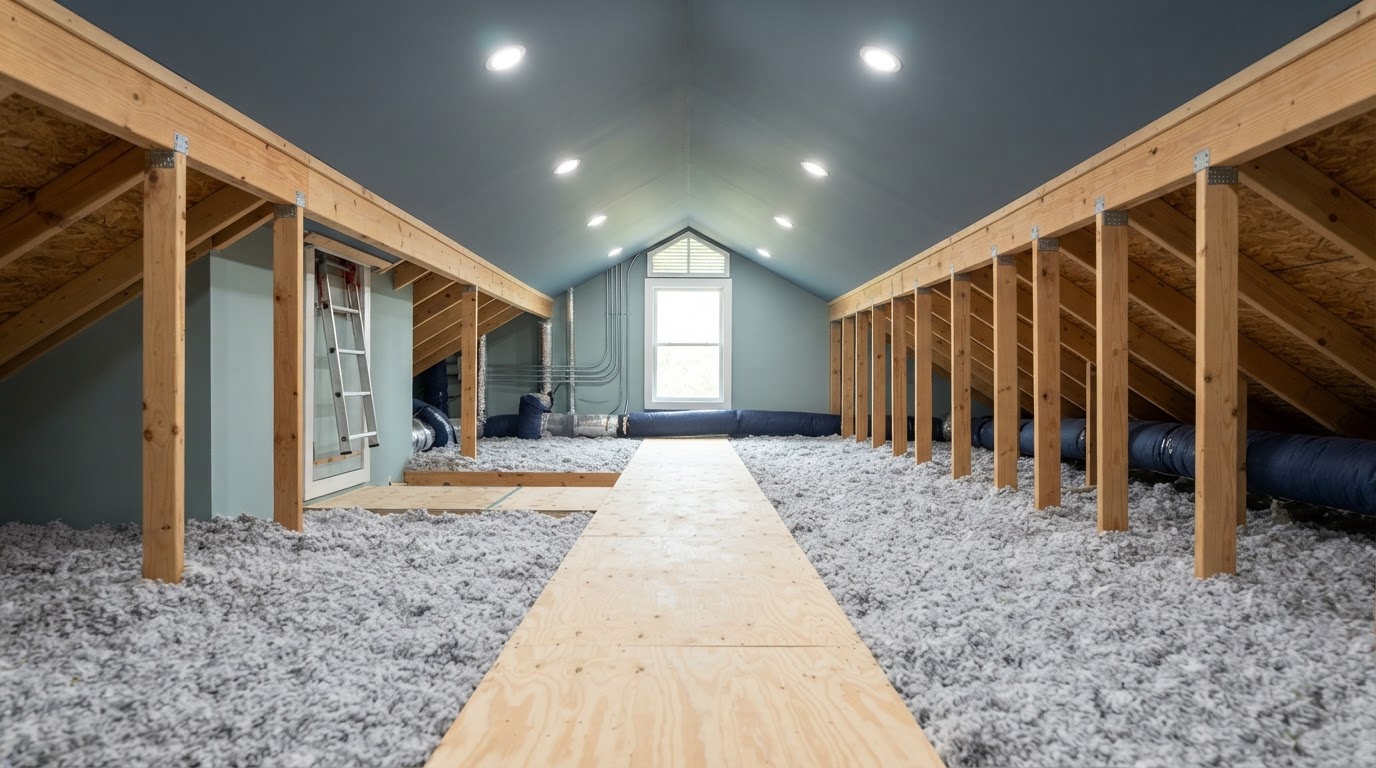
Ready for a clean, safe, energy-efficient attic?
Get a free estimate today. Same-day service available across Los Angeles.