
Attic Mold Treatment in Los Angeles: Find the Cause, Fix the Growth
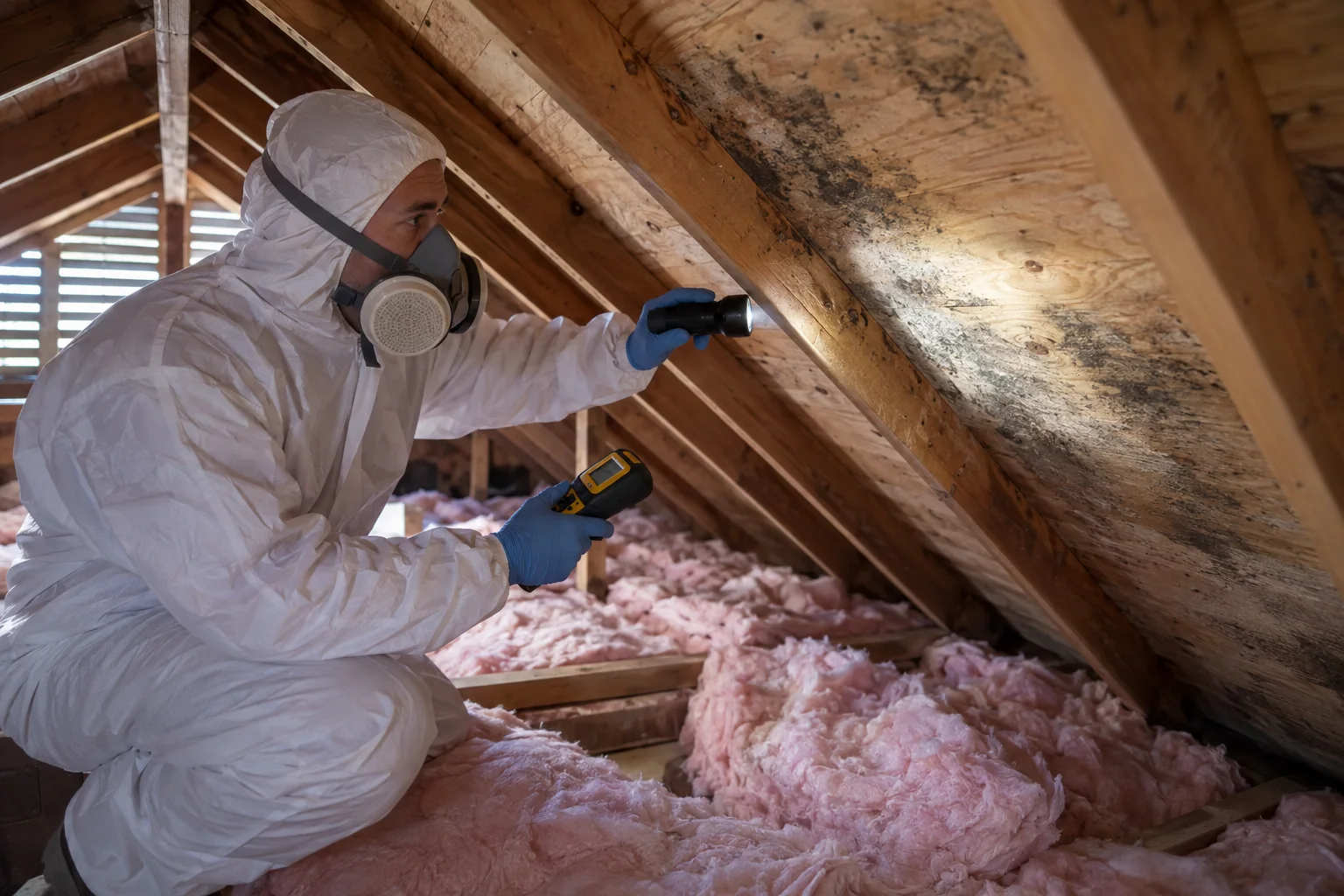
You popped the attic hatch to grab a storage box and saw dark staining across the roof boards, or you caught a musty smell that was not there last year. Now you are wondering how serious it is and what to do next. This guide explains attic mold treatment for Los Angeles homeowners in plain English: what usually causes it, what a professional process involves, how the main treatment methods compare, and what a written estimate should include.
The short answer: professional attic mold treatment starts with finding and correcting the moisture source. A qualified crew then contains the work area, cleans or removes affected materials as appropriate, dries the attic, and checks the result before insulation or finishes go back in. Spraying alone does not fix a leak or a ventilation problem.
If you would rather have someone look at it first, request a free attic inspection or call (877) 706-9839 and we will walk through what we find before recommending any work.
In this guide: what to do first, common Los Angeles causes, how treatment works, methods compared, cost factors, DIY vs. professional, prevention, and FAQs.
What Should You Do First If You Find Mold in Your Attic?
Start by observing, not scrubbing. Note where the growth is, how large the area looks, and whether anything feels damp. Take a few photos from the hatch, keep kids and pets out, and avoid disturbing insulation or stained wood until the moisture source has been identified. Then schedule an assessment.
The U.S. EPA's guide to mold, moisture, and your home puts it simply: the key to mold control is moisture control. If the mold is cleaned but the water problem stays, the mold is likely to come back.
Signs homeowners may notice
- Dark gray, black, white, or green staining on roof sheathing (the plywood or boards under the roof), usually near the eaves or around roof penetrations
- Spotting or fuzzy growth on rafters and framing
- A musty or earthy odor near the attic hatch or in upstairs rooms
- Damp, matted, or discolored insulation
- Rusty nail tips poking through the roof deck, which can point to condensation
- Water stains on ceilings below the attic
Color does not tell you how dangerous a growth is or what type it is. The California Department of Public Health treats visible mold of any color, mold odor, water damage, and damp materials as the warning signs worth acting on.
What not to disturb before an assessment
- Insulation: pulling or raking it can release dust and spores into the attic air and, through gaps, into the home.
- HVAC equipment: if ducts or the air handler sit in or near the affected area, EPA advises not running a system you suspect is contaminated.
- Older insulation types: vermiculite (a pebbly, gray-brown loose fill) should not be disturbed until it has been evaluated.
- Bleach or store-bought sprays: these can hide staining without fixing the cause, and EPA notes that dead mold can still cause allergic reactions, so it must be removed, not just killed.
Common Causes of Attic Mold in Los Angeles
Mold needs moisture to grow. In Los Angeles attics, that moisture usually comes from one of a handful of sources. The table below links what you might see to the likely cause and what an inspection should check.
| What you notice | Possible cause | What the inspection should check |
|---|---|---|
| Staining in one spot, often near a chimney, vent, or valley | Roof leak or failed flashing | Roof deck moisture readings, flashing, and underlayment around penetrations |
| Growth clustered around a bathroom or kitchen | Exhaust fan venting into the attic | Where each exhaust duct actually ends and whether it reaches the outdoors |
| Even darkening across north-facing or upper sheathing | Poor ventilation or warm, moist air leaking up from the house | Soffit and roof vents, blocked baffles, and ceiling air leaks |
| Growth or damp insulation near ducts or the air handler | HVAC duct condensation or a condensate line problem | Duct seams and insulation, drain pan, and condensate line |
Roof leaks and storm-related water entry
Southern California storms are less frequent than in wetter regions, but they can be heavy. Aging tile underlayment, cracked flashing, or a slipped tile can let water in during a single storm and leave sheathing damp long after the sky clears. Localized staining is the classic clue.
Bathroom or kitchen exhaust venting into the attic
It is common to find bathroom fan ducts that were never connected to a roof or wall cap, or that came loose over time. Every shower then pushes warm, wet air straight into the attic. Fixing the duct route is part of the treatment, not an extra.
Blocked or poorly balanced ventilation
Insulation pushed into the eaves, painted-over vents, or too few exhaust vents can trap humid air. Coastal neighborhoods with marine layer mornings can be more prone to this pattern. Gaps around ceiling lights, plumbing, and wiring also let indoor moisture drift up, which is why attic air sealing is often part of a lasting fix.
HVAC ducts, air handlers, and condensate issues
Many Los Angeles homes run ductwork and air handlers through the attic. When cold ducts are leaky or poorly insulated, warm attic air can condense on them in summer. A clogged condensate line can also overflow onto insulation. If ducts are part of the problem, attic air duct repair and replacement may need to happen alongside the mold work.
How Professional Attic Mold Treatment Works
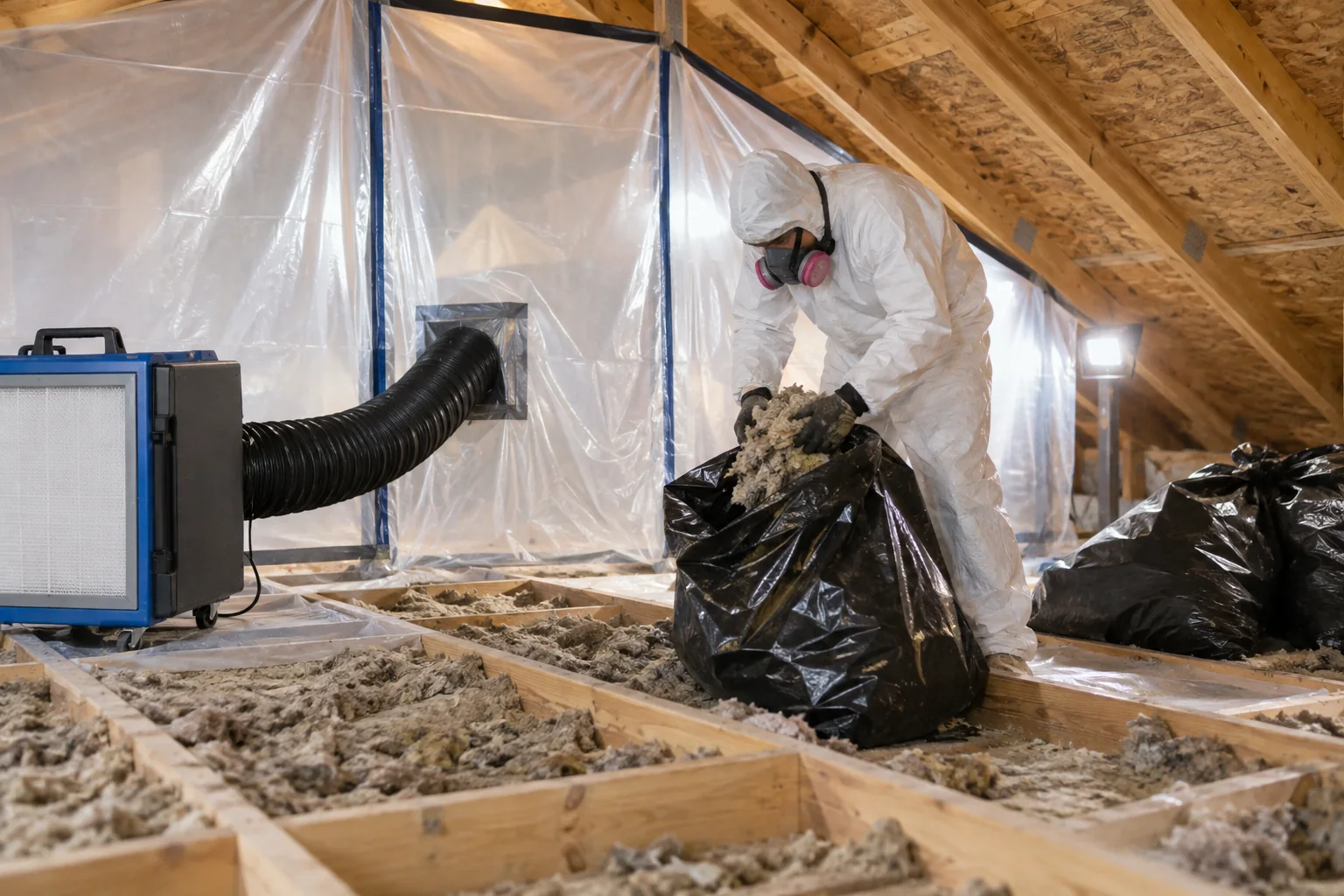
Good attic mold treatment follows a clear order. Skipping a step, especially the first one, is the most common reason mold returns.
1. Assess the affected area and moisture source
The crew maps the affected area, takes moisture readings on wood and insulation, checks exhaust ducts, vents, roof penetrations, and HVAC equipment, and photographs what they find. The output should be a plain explanation of the likely cause and a written scope. If the cause is a roof or HVAC repair outside the crew's trade, the scope should say who handles it.
2. Contain the work area and protect the home
Plastic sheeting around the hatch and work zone, plus air filtration, helps keep disturbed dust and spores in the attic and out of living areas. Workers wear appropriate protective gear.
3. Clean or remove affected materials, as appropriate
Hard surfaces like rafters and sheathing are usually cleaned, while porous materials that cannot be cleaned well, such as soaked or heavily contaminated insulation, are typically removed and bagged. EPA notes that absorbent materials may need to be thrown away because mold can fill their crevices. Our attic insulation removal and replacement service covers the bagging, removal, and attic floor cleaning that often comes with this step.
4. Dry, document, and verify before replacing materials
Wood should be dry and the moisture source corrected before anything is closed back up. A final walkthrough with photos should show no visible growth or moldy odor. Only then should fresh insulation go in. EPA's checklist for a finished cleanup is a good benchmark: the water problem is fixed, visible mold and odors are gone, and the area shows no new signs of moisture on a follow-up visit.
Not sure which step your attic needs? Book a free attic inspection and get a written, step-by-step scope before you commit to anything.
Attic Mold Treatment Methods Compared
You will hear about several methods. Each has a job, and none of them replaces fixing the moisture source.
| Method | What it does | When it may fit | Limits |
|---|---|---|---|
| HEPA vacuuming and wiping | Physically removes surface growth and dust | Light to moderate surface growth on wood | Labor intensive; may leave cosmetic staining |
| Mechanical cleaning (sanding or wire brushing) | Removes growth embedded in the wood surface | Heavier growth on sound framing and sheathing | Creates dust, so containment matters |
| Media blasting (for example, dry ice or soda) | Blasts growth off large wood surfaces quickly | Large, widespread areas with good access | Specialized equipment; not every attic suits it |
| Antimicrobial or encapsulating coatings | Treats or seals cleaned surfaces | After cleaning, as an added layer | Not a substitute for cleaning or source correction; EPA advises against painting over mold |
| Material removal and replacement | Takes out what cannot be cleaned | Soaked insulation, rotted or weakened wood | Adds material cost; may need roofing or carpentry |
What Affects Attic Mold Treatment Cost in Los Angeles?
Attic mold treatment cost depends on scope, not a flat rate. The biggest drivers are the size of the affected area, how easy the attic is to access, whether insulation must be removed and replaced, how much drying is needed, and what repairs the moisture source requires. A trustworthy estimate separates these items so you can see what you are paying for.
A clear written estimate should list each of these as its own line:
- Inspection findings and the identified or suspected moisture source
- Containment and air filtration
- Cleaning method and square footage of affected wood
- Insulation removal, disposal, and replacement (if needed)
- Moisture correction work, and who performs it (for example, exhaust duct rerouting, air sealing, roofing, or HVAC)
- Drying and final verification, including photos
We provide free, honest estimates after an inspection, so you can compare scopes line by line instead of guessing from national averages.
When Should You Call a Professional Instead of Attempting DIY?
EPA's general rule is that a moldy area under about 10 square feet (roughly 3 feet by 3 feet) can often be handled by a homeowner. Attics are a special case: they are hot, cramped, hard to move in safely, and the moisture source is often hidden. Call a professional when any of the following apply:
- Growth covers more than about 10 square feet, or appears in several spots
- Insulation is damp, matted, or contaminated
- You cannot find or fix the moisture source yourself
- Ducts or the air handler are near the affected area
- Anyone in the home has asthma, allergies, or other health concerns (consult a health professional too)
- The attic has vermiculite or other insulation you cannot identify
If you do tackle a small area, follow EPA's guidance on protective gear and never mix bleach with ammonia-based cleaners.
How to Reduce the Chance of Attic Mold Returning
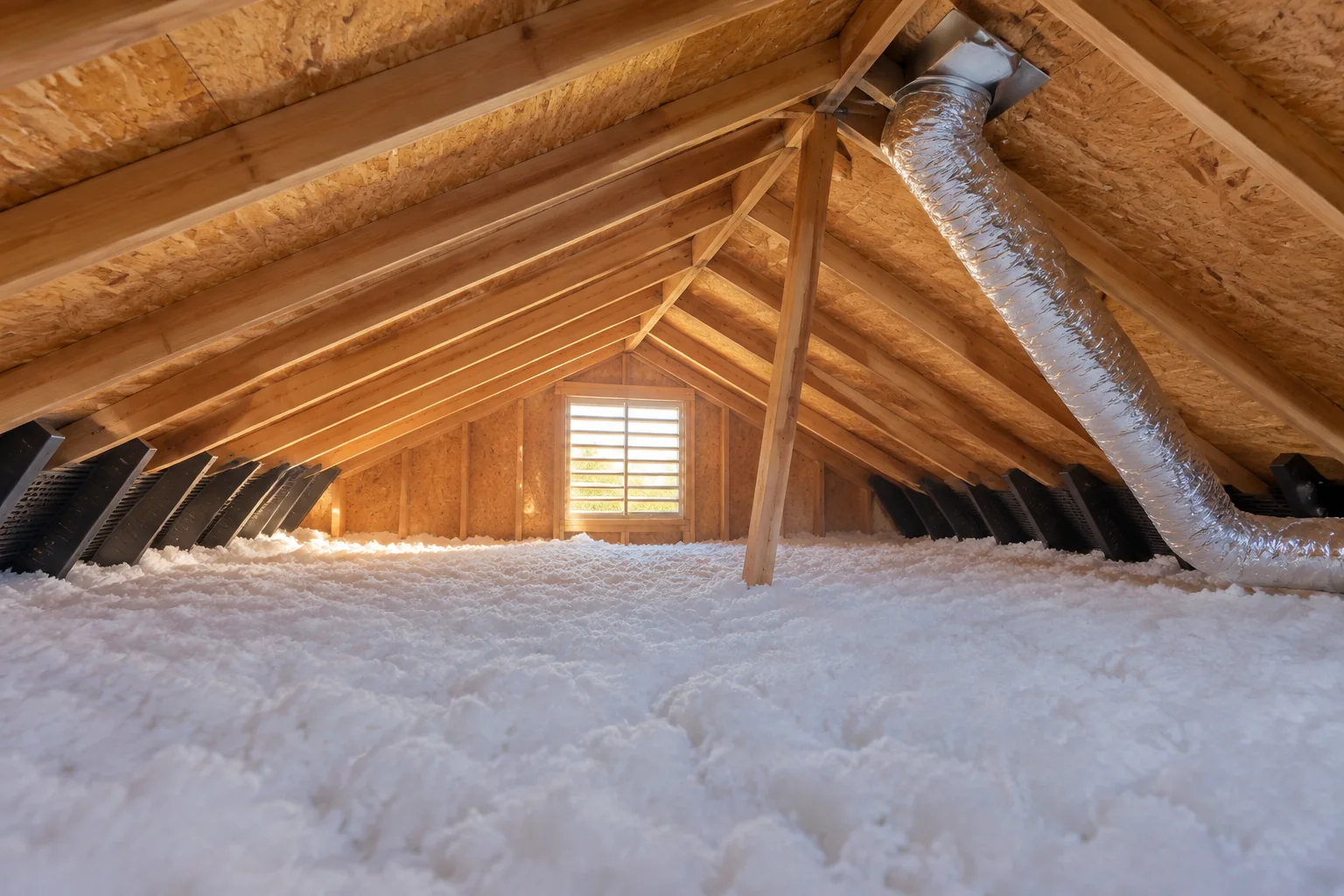
Prevention is the moisture fix done properly, then maintained. These steps work together:
- Vent every exhaust fan outdoors. Bathroom, kitchen, and dryer ducts should end at a roof or wall cap, never in the attic.
- Seal ceiling air leaks. Gaps around lights, plumbing, and wiring let warm, moist air rise into the attic.
- Keep eave vents clear. Baffles stop insulation from blocking airflow at the soffits.
- Insulate and seal attic ducts. This reduces condensation in summer and saves energy.
- Keep the AC condensate line clear. EPA recommends keeping drip pans clean and drain lines flowing.
- Repair roof issues promptly. Wet materials dried within 24 to 48 hours usually do not grow mold, according to EPA.
- Check the attic once or twice a year. A quick look after the rainy season catches problems early.
Some of this work, like roofing, may need a roofer or HVAC contractor. Our attic services cover air sealing, duct repair, insulation, and cleanup, and our article on Los Angeles attic repair explains how to sequence repairs so small problems do not grow.
Key Takeaways
- Attic mold treatment only lasts when the moisture source is found and corrected first.
- Common Los Angeles causes are roof leaks, exhaust fans venting into the attic, poor ventilation, and HVAC condensation.
- Good treatment follows a clear order: assess, contain, clean or remove, dry, verify, then reinsulate.
- Coatings and sprays are add-ons, not a substitute for cleaning and fixing the cause.
- Ask for a written, itemized scope so you know exactly what you are paying for.
Attic Mold Treatment Questions Homeowners Ask
Does attic mold always mean insulation must be replaced?
No. Insulation that is dry and not visibly contaminated can sometimes stay. Insulation that is damp, matted, moldy, or holding odors is usually removed, because porous materials are hard to clean thoroughly. An inspection with moisture readings should decide this area by area, and the estimate should show exactly how much insulation is being replaced and why.
Can attic mold be treated without replacing the roof?
In most cases, yes. Surface growth on sound roof sheathing and rafters can usually be cleaned. Replacement is typically only needed where wood is rotted, soft, or structurally weakened. If a roof leak caused the mold, that specific leak still needs repair, which may be a targeted fix rather than a full roof replacement.
Will attic mold come back after treatment?
It can if the moisture problem remains. Mold spores are always present in the air, and they only grow when surfaces stay damp. When the leak, exhaust duct, ventilation, or condensation issue is corrected and the attic is dried, the chances of regrowth drop significantly. A follow-up check after the next rainy season is a smart habit.
Can you simply spray attic mold?
Spraying alone is not a complete treatment. EPA notes that killing mold is not enough, because dead mold can still cause allergic reactions and must be removed. Sprays also do nothing about the moisture source. Coatings can be useful after cleaning, but they should never be the whole plan.
How long can attic mold treatment take?
It depends on the size of the affected area, attic access, whether insulation is being replaced, and any drying or repairs needed. Small, accessible areas may take a day, while larger jobs with insulation removal and duct or ventilation work can take longer. Your written estimate should include a realistic timeline.
Do I need mold testing before treatment?
Often not. EPA says sampling is usually unnecessary when mold is visible, and the California Department of Public Health says identifying the mold type is not important for fixing the problem. Testing can still be useful in specific situations, such as checking hidden areas or verifying cleanup, and should be done by experienced professionals.
Is attic mold a problem for California rental properties?
It can be. Under the California Health and Safety Code, dampness or visible mold that is a hazard to occupants can make a home substandard, and the owner must fix the conditions. Landlords and property managers should address attic moisture and mold promptly and keep records of the work done.
Does homeowners insurance cover attic mold treatment?
Coverage varies by policy. Some policies may cover mold tied to a sudden, covered event like a burst pipe, while mold from long-term leaks or poor ventilation is often excluded. Check your policy and talk with your insurer. Detailed photos and a written scope from your inspection can help with any claim.
Get Attic Mold Treatment in Los Angeles Started the Right Way
Attic mold treatment in Los Angeles works best when it is treated as a moisture problem first and a cleaning job second. Find the source, contain the work, clean or remove what is affected, dry and verify, and only then reinsulate. That order protects your home and your budget.
Los Angeles Attic Cleanup is licensed and insured, offers free estimates and same-day service across greater Los Angeles, and handles the attic cleanup, insulation, air sealing, and duct work that often go hand in hand with mold problems.
Schedule your free attic inspection or call (877) 706-9839 to talk through what you are seeing.
Ready for a clean, safe, energy-efficient attic?
Get a free estimate today. Same-day service available across Los Angeles.