
Attic Dehumidification in Los Angeles: Find the Moisture Source First
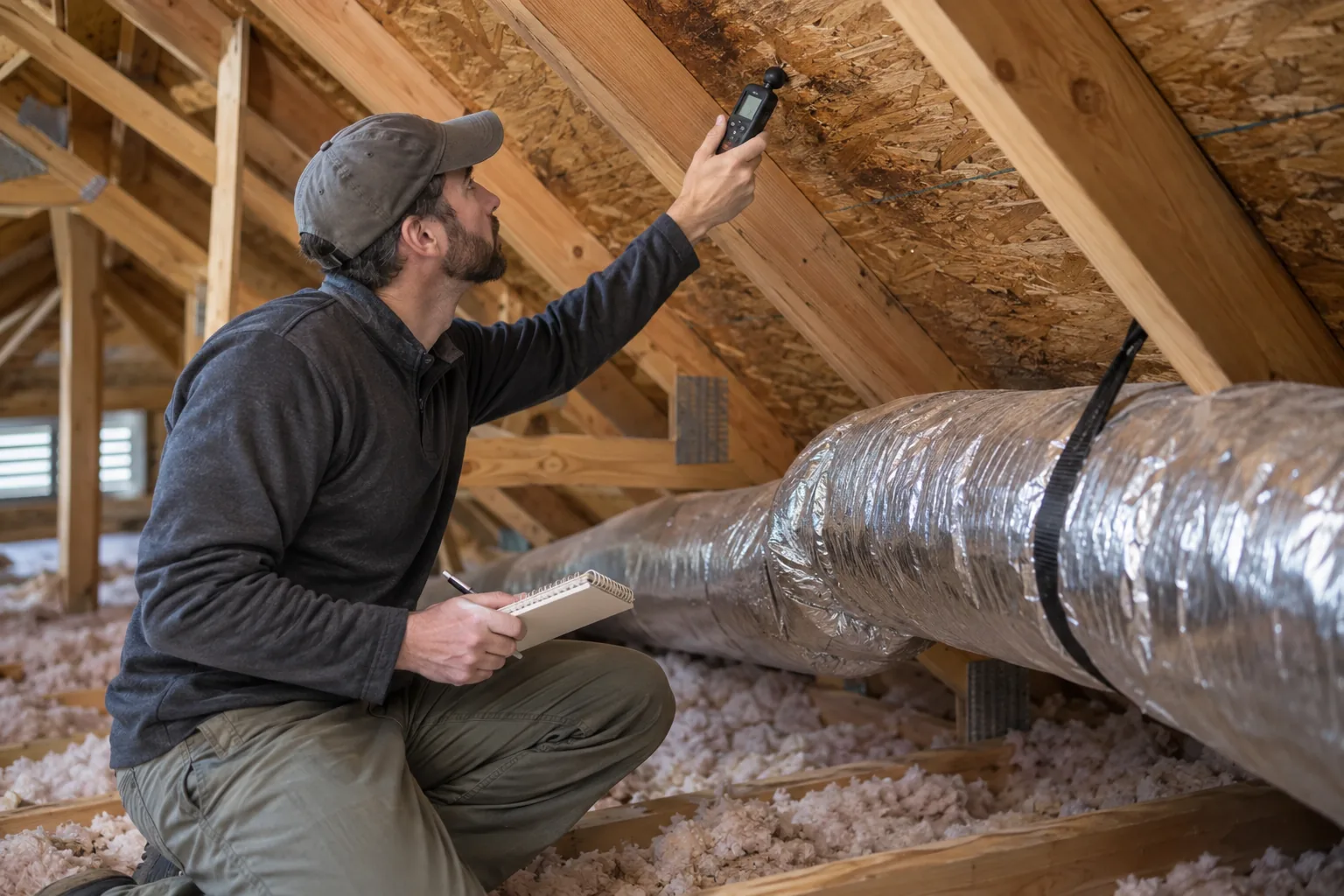
A musty smell, water mark, or damp insulation can make an attic dehumidifier sound like the obvious fix. But attic moisture can come from several different sources, and a machine cannot repair a roof leak, redirect an exhaust duct, or correct a poorly matched attic assembly. The useful first step is to identify where the moisture is coming from.
This guide explains when attic dehumidification may help, what to check first, and why vented and sealed attics need different decisions. For a broader look at moisture clues and repair order, see Los Angeles Attic Repair: What to Fix Before Small Problems Grow.
Is attic dehumidification necessary?
An attic dehumidifier may help only when the attic assembly and measured moisture conditions call for active humidity control. First rule out roof or plumbing leaks, exhaust ducts ending in the attic, air leakage, and HVAC condensation. Vented and sealed attics behave differently, so do not choose equipment from attic size or a musty smell alone.
Moisture clues are a reason to investigate, not a diagnosis. Wet insulation, condensation, staining, musty odors, or visible growth can point to a problem, but the same symptom may have different causes. The U.S. Department of Energy’s Guide to Durable Attics describes roof water entry, household moisture, and ventilation as issues to check together.
If you need a local next step, Los Angeles Attic Cleanup advertises free attic inspections and estimates and lists attic cleanup, air sealing, duct repair, and insulation services. You can request a free estimate or call (877) 706-9839 and confirm whether the specific work you are considering is within the company’s current scope. The site does not list attic dehumidifier installation as a service.
What signs may point to attic moisture?
Homeowners may notice a musty odor, water staining, damp or compressed insulation, droplets on ductwork or roof sheathing, or changes in the condition of wood. These signs do not tell you the source or whether a dehumidifier is appropriate. The attic may need leak repair, exhaust correction, air sealing, drying, insulation work, or a combination of steps.
Do not step on ceiling drywall or disturb materials you cannot identify. Attics can contain exposed fasteners, wiring, unstable surfaces, and insulation that requires careful evaluation. The DOE’s attic air-sealing guide calls for inspecting safety and moisture conditions before work begins.
Why does attic type change the answer?
A vented attic is generally separated from the home by an insulated ceiling and has planned air openings to the outdoors. An unvented or sealed attic places the thermal and air-control layers at or near the roofline. A dehumidifier that is suitable for one assembly may be inappropriate for another, and an attic that looks sealed may still have unplanned air or moisture paths.
| Attic setup | What to understand first | Why a dehumidifier is not an automatic answer |
|---|---|---|
| Vented attic | Check intended intake and exhaust paths, insulation placement, and whether vents are blocked or altered. | Changing ventilation or adding equipment without understanding the assembly can create new moisture or durability problems. |
| Unvented or sealed attic | Confirm where the air and insulation boundaries are, how the space is connected to the home, and how moisture is managed. | These assemblies can require coordinated design, airflow, and humidity controls rather than a portable unit placed in the space. |
| Unclear or mixed assembly | Have a qualified building-performance or HVAC professional identify the assembly before selecting a fix. | Older renovations may combine different approaches; the visible symptoms alone do not reveal how the full roof system works. |
The Building America Solution Center’s guidance on moisture in unvented attics shows why moisture control depends on the assembly and its design. It is technical guidance, not a substitute for checking current local requirements or evaluating a specific home.
Find the moisture source before choosing equipment
Start with the source, not the device. A useful inspection checks for liquid water, humid air entering the attic, condensation on cold surfaces, and problems with ventilation or the attic assembly. Fixing or controlling the cause is the first decision; dehumidification is considered only after the conditions and system are understood.
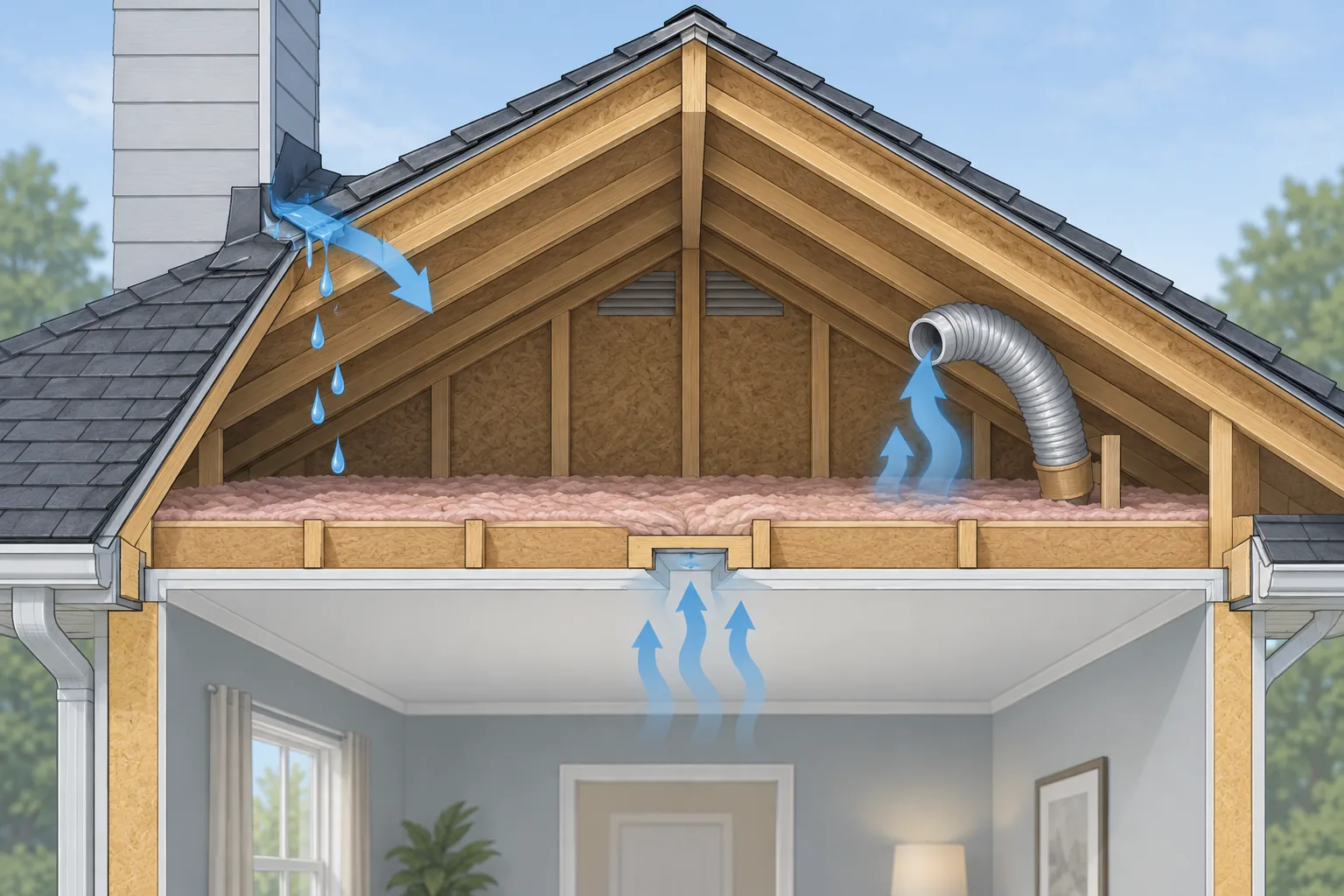
| Possible source | What an inspection may check | Likely first question |
|---|---|---|
| Roof or flashing leak | Staining, wet insulation, roof penetrations, flashing, and changes after rain. | Is water entering from above, and does the roof need repair? |
| Plumbing leak | Pipes, fittings, and nearby wood or insulation for active or past wetting. | Is there a plumbing source that needs repair before drying? |
| Exhaust ending in the attic | Whether bathroom, kitchen, or dryer exhaust is properly routed outdoors. | Is moisture-producing air being discharged into the attic? |
| Air leakage from the home | Gaps around attic access, wiring, pipes, recessed fixtures, and other ceiling penetrations. | Can warm indoor air carry moisture into the attic through an unintended opening? |
| HVAC duct or condensation issue | Duct connections, insulation, cold surfaces, condensate handling, and signs of leakage. | Is a system leak or cold surface contributing to condensation? |
| Ventilation or assembly mismatch | Attic type, blocked airflow, prior alterations, and the location of insulation and air barriers. | Does the current setup match the way this attic is intended to manage moisture? |
These are inspection prompts, not a do-it-yourself diagnosis. The U.S. Environmental Protection Agency’s mold and moisture guide emphasizes controlling moisture and correcting water problems; it also notes that wet materials should be dried promptly. If materials are actively wet, the priority is to stop the water and dry the affected area safely, not to mask the symptom with equipment.
What can an attic dehumidifier fix, and what can’t it fix?
A dehumidifier removes water vapor from air under conditions within its operating limits. It does not stop bulk water, repair a roof or plumbing leak, redirect an exhaust fan, correct a duct leak, or remove existing mold. If the moisture source continues, equipment may run without solving the cause and affected materials may remain at risk.
- Roof or plumbing leak: locate and repair the source, then assess and dry affected materials.
- Exhaust routed into the attic: have the duct termination corrected so moisture-producing exhaust is carried outdoors as required.
- Air leakage: determine which gaps can be safely sealed without blocking intended ventilation or changing combustion-air pathways.
- HVAC condensation or leakage: have ductwork, insulation, and condensate handling checked by a qualified HVAC professional.
- Existing mold or damaged insulation: assess the material and scope separately. A dehumidifier is not mold cleanup or insulation replacement.
For more on why wet or contaminated insulation should not simply be buried, read the site’s homeowner guide to attic insulation. Los Angeles Attic Cleanup’s attic services page lists cleanup, insulation removal and replacement, air sealing, and duct repair or replacement; the appropriate service depends on what the inspection finds.
When might an attic dehumidifier make sense?
Active dehumidification may be considered when a qualified professional confirms persistent moisture conditions, the bulk-water and air-leakage sources have been addressed, and the attic assembly can be managed safely with that equipment. It should be a measured, assembly-specific decision, not a default response to an odor, a single humidity reading, or a guess based on floor area.
Before selecting or installing equipment, ask how the recommendation accounts for:
- Measured conditions: temperature and relative humidity over time, not just one brief reading.
- Attic assembly: vented, unvented, or mixed construction and where the insulation and air-control layers sit.
- Moisture load: the source, amount, and persistence of moisture that remains after repairs.
- Operating range: whether the selected unit is designed to function at the attic’s expected temperatures.
- Drainage and power: a safe condensate route, suitable electrical supply, access for service, and compliance with product instructions and applicable requirements.
- Follow-up: how the professional will confirm that the moisture condition has improved and whether additional repairs are needed.
Do not size an attic dehumidifier from square footage alone. A unit’s capacity, operating temperature, drainage, and control settings need to match the actual conditions. A qualified professional should also check whether the building’s ventilation, air-sealing, or HVAC setup needs correction first.
How do Los Angeles conditions affect the decision?
“Los Angeles” does not describe one attic climate. Coastal exposure, inland or valley conditions, shade, roof construction, attic ventilation, indoor moisture sources, and HVAC use can vary from home to home. A neighborhood or general weather pattern cannot replace attic readings and an inspection of the actual roof assembly.
A California-focused review of sealed and insulated attics by Lawrence Berkeley National Laboratory discusses how moisture risk can differ with climate and marine exposure. The review is a research resource, not a prediction for every Los Angeles house. Use local exposure as a reason to ask better questions, not as proof that a home needs a dehumidifier.
For example, ask whether the moisture appears after rain, during a particular HVAC season, or around one duct or roof area. Those patterns may help a professional narrow the investigation, but they do not establish the cause on their own.
What should a professional attic moisture assessment include?
A useful assessment should identify the attic assembly, document visible moisture clues, investigate likely sources, and separate immediate repairs from optional equipment. The homeowner should receive an explanation of what was observed, what remains uncertain, and which next step belongs to a roofer, plumber, HVAC contractor, insulation professional, or another qualified specialist.
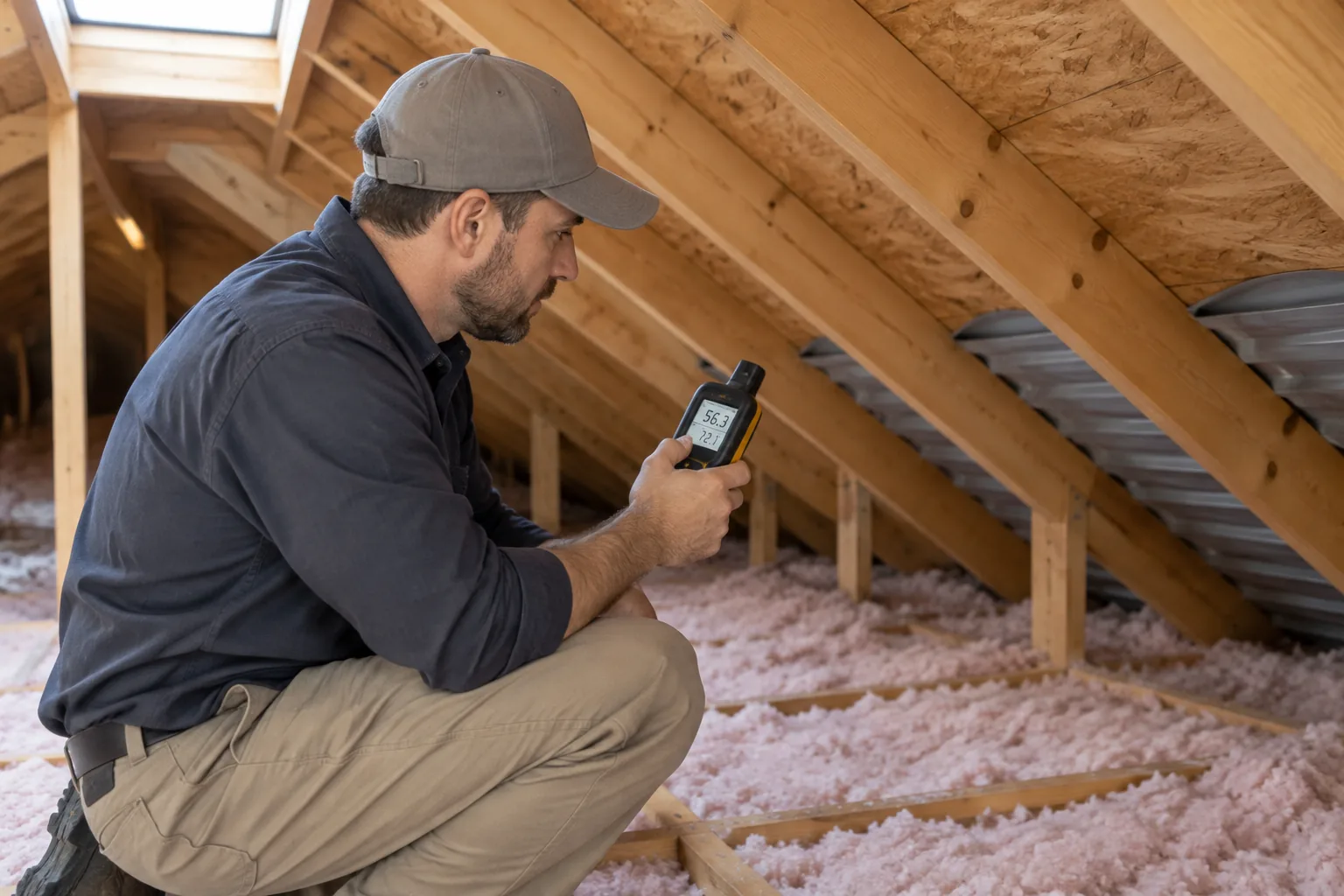
Before approving equipment or cleanup, ask:
- What evidence points to the moisture source?
- Is there an active leak or an exhaust duct that needs correction?
- What type of attic assembly is present, and how does it manage moisture?
- What work is included in the written estimate, and what needs a separate trade?
- If a dehumidifier is recommended, how are capacity, operating temperature, drainage, electrical needs, maintenance, and follow-up determined?
A written scope should distinguish source repair, drying, cleaning or material removal, insulation work, and any equipment. This makes it easier to compare proposals and avoid paying for a machine before the underlying problem is understood.
Key Takeaways
- Attic dehumidification is not a universal fix; the attic type and moisture source determine whether it is appropriate.
- Check for roof and plumbing leaks, exhaust routing, air leakage, HVAC condensation, and ventilation or assembly issues first.
- A dehumidifier can reduce moisture in the air under suitable conditions, but it does not repair leaks or remove mold.
- Do not choose equipment by square footage alone; confirm operating range, drainage, power, and follow-up with a qualified professional.
- Los Angeles homes vary, so use measured conditions and the home’s actual construction rather than neighborhood assumptions.
Attic dehumidification FAQs
Can I use a portable dehumidifier in an attic?
A portable dehumidifier may not be suitable for an attic. Attic temperatures, electrical access, drainage, ventilation, and the building assembly all affect safe operation. Before placing a unit in the space, identify the moisture source and check the manufacturer’s operating limits with a qualified professional. A portable unit should not be treated as a substitute for repairing a leak.
Is attic ventilation enough to control moisture?
Not always. Ventilation is one part of an attic’s moisture strategy, but it cannot repair a roof leak, redirect an exhaust duct, or correct air leakage from the home. The right approach depends on whether the attic is designed to be vented or unvented and whether its airflow paths are working as intended. Do not open or close vents without evaluating the assembly.
Does a dehumidifier remove attic mold?
No. A dehumidifier can lower moisture in the air when used within its operating limits, but it does not remove existing mold or repair the water problem that allowed growth. The EPA recommends correcting the moisture source and cleaning or removing affected materials as appropriate. If mold or damaged materials are present, assess that work separately.
What humidity level should an attic stay at?
There is no single relative-humidity target that is appropriate for every attic at every temperature. Readings need context: surface temperatures, outdoor conditions, attic type, insulation location, and moisture sources all matter. A one-time number from a handheld meter cannot fully describe the risk. Ask a qualified professional how readings were collected and interpreted.
What should I do if my attic smells musty?
A musty odor can be a reason to investigate, even when the source is not visible, but it does not identify a specific material or cause. Look for signs of water entry without disturbing insulation or suspect growth, and arrange a qualified assessment if the odor persists or follows water damage. Check roof, exhaust, plumbing, and HVAC conditions rather than assuming a dehumidifier is needed.
Choose the next step based on the source
The best attic dehumidification plan starts with a clear answer to a simpler question: where is the moisture coming from? Repair water entry, correct exhaust or air-leakage issues, and understand whether the attic is vented or sealed before considering equipment. A dehumidifier may be part of a solution for some assemblies, but it should follow diagnosis, not replace it.
For attic cleanup, insulation, air sealing, or duct concerns in Los Angeles, review Los Angeles Attic Cleanup’s attic services. To ask about your home and request a free estimate, use the contact page or call (877) 706-9839. Confirm the exact service scope before treating attic dehumidifier installation as an available option.
Ready for a clean, safe, energy-efficient attic?
Get a free estimate today. Same-day service available across Los Angeles.